The smell of sheep is heady as I slide the yarn out of its sleeve. I’m reluctant as I put the first of 23 skeins on the swift for winding. It’s old yarn. Probably spun before I was born; back when Bear Brand Yarns, USA was still a going concern.
The labels are in good nick, which gives me another pang of guilt. It says, “Permanently Mothproofed” and “Knits in a Jiffy on Big Needles”. It calls the yarn Four Seasons and that it’s a “washable” color. Though the care instructions tell a different story. This yarn will likely felt if not washed carefully by hand.
Bear Brand Four Seasons vintage yarn in a rich teal
The color is surprising—a lovely teal that you don’t often see in vintage yarns. Looking closely, it’s a consistent, solid color, mildly heathered only because it is 100% pure fleece wool. There’s none of the color variation you get with newer yarns or unrelenting fixed color of acrylic. It’s a color I gravitate to when purchasing new yarn and yet I’ve kept it “as is” for more than 25 years, since my grandmother stopped knitting like a treasured antique.
It is that—a treasure. But to leave it unused doesn’t feel right. And in this new year, I want to change that.
As I turn the winder, the smell of sheep brings back memories. I hear my grandmother telling me to be careful putting the hanks on back-to-back chairs for winding. She owned a winder, but not a swift, but she’s most often wind balls by hand because it was “too much trouble to get that contraption” out.
As the 23 small cakes build up (only 71 yards each) these skeins are in the phase of becoming. And that by caking them, they are that much closer to being something warm and loved, instead of languishing in a box, waiting to be used.
Now to choose a project. A blanket or a sweater? It’s a tough choice. Thoughts?
In 2022, I took a year off from my “Buy No New Yarn” fast. The result was that I knit twice as many projects than I had in any previous year. Let’s face it. Touching feeling and smelling fresh fiber is part of the inspiration that drives us as fiber artists.
In 2023, I went back on my “yarn buying fast”. Did this impact my creativity? Possibly, but it was only one of many reasons.
Seed Stitch BathmatShadow Study ThrowTenderfoot BathmatHome Knits of 2023
It’s been a tough year. Some of the highlights were catching Covid (twice, once severely), being my parent’s 24/7 carer for 5 weeks, a water heater failure, black mold, rats and repair/remodeling fails.
With my knitting time curtailed, I only completed 9 projects (shown here)—mainly simple and small scrappy items. The upside: everything started was finished. The downside: at one point there was nothing on my needles for weeks. It felt odd and a bit scary to be “stuck” for inspiration.
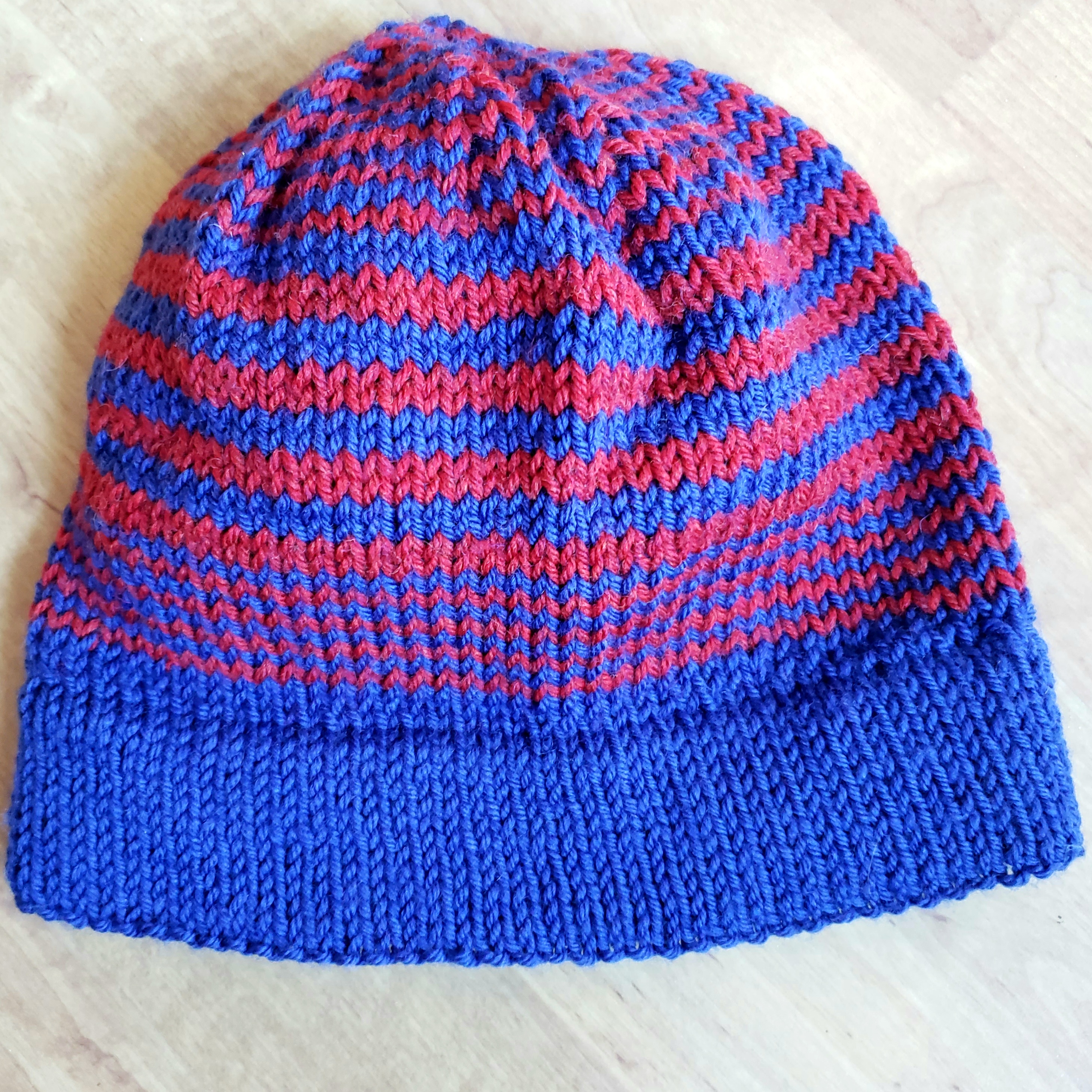
Whale Tail HatFool Hat for DadPastiche Hat Hats Knitted in 2023
I’m bursting with enthusiasm for 2024.
Will I keep the yarn fast going? Maybe, but it won’t be a rule. So far, I’m focused on “shopping” through the amazing yarns in my stash. These have been paired with beautiful patterns already in my library—ones I’ve wanted to make for years.
Vogue Knitting – Deep V CoverupNo Pattern – Fitted TurtleneckSleeveless Shell in Broken RibSweaters Knitted in 2023
What’s helped is that my stash and library are (now) within arm’s reach. My library is in a bookshelf next to my bed. My stash in my closet. To get up and get dressed is to be surrounded by inspiration.
I also decided to stop saving scraps of yarn (less than 100 yards) and removed a lot scrappy projects from my queue. Too often they felt like things I “should” knit as opposed to making things I want to knit.
Alongside new projects, I queued ones I’ve made and loved. If you loved a project, why not make it again in a different color or yarn weight? Just swatch until you get the right gauge/color scheme.
I’m also adopting the mindset that more isn’t better. Better is better. And what’s better than doing the projects that inspire you?
I meant to talk about it last month, but since a friend of mine already blogged about it, I think I felt a bit like it didn’t matter. We ended up getting a lot of local news coverage (CBS, Seattle Spectator, Capitol Hill Seattle Blog, etc.). It was heartwarming (and body warming) fun!
In retrospect, I think there are thoughts I can share. For example, beyond charity, reasons why you may wish to consider it.
Fellowship: I loved participating with others in my group. We are not a guild, just a bunch of gals that meet up at a brewery. A common cause to be a force for good made us even more cohesive.
Stashbusting: As I’ve said elsewhere in this blog, I have so. much. yarn. Why not use it for a good cause?
Swatching: You have to be careful here since a hat in the round may not match a flat swatch (the curse of purling). But if you are planning an in-the-round project, as I was, it’s a great test. Or knit a scarf in the new pattern/technique you are trying to perfect.
Joy: It made me happy to think someone in need would be wearing items I made. I love the notion that I may have made a difference. It’s true that woolen socks, hats and scarves only addresses a tiny piece of the challenges facing the unhoused. But there is joy in making whatever contribution you can to those in need.
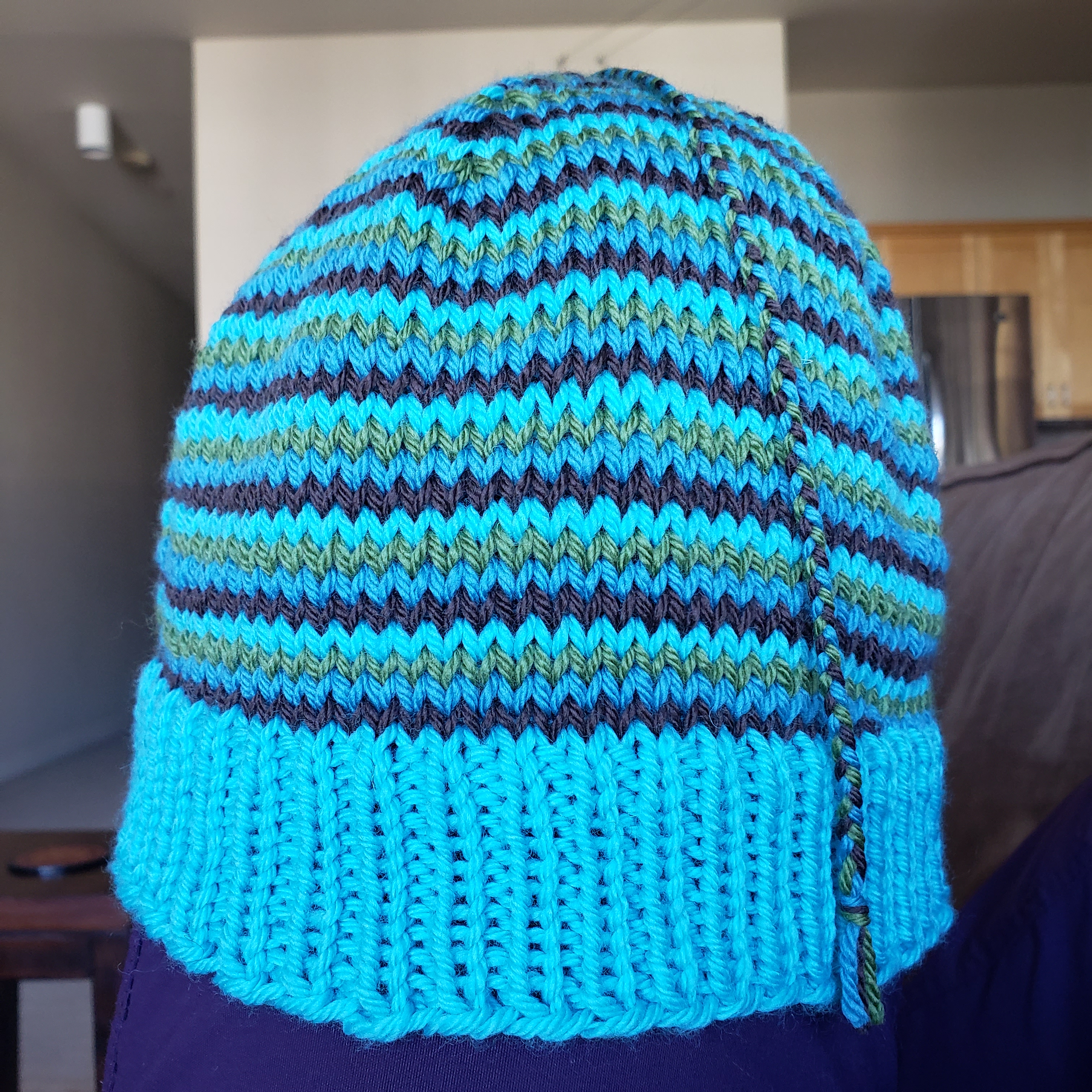
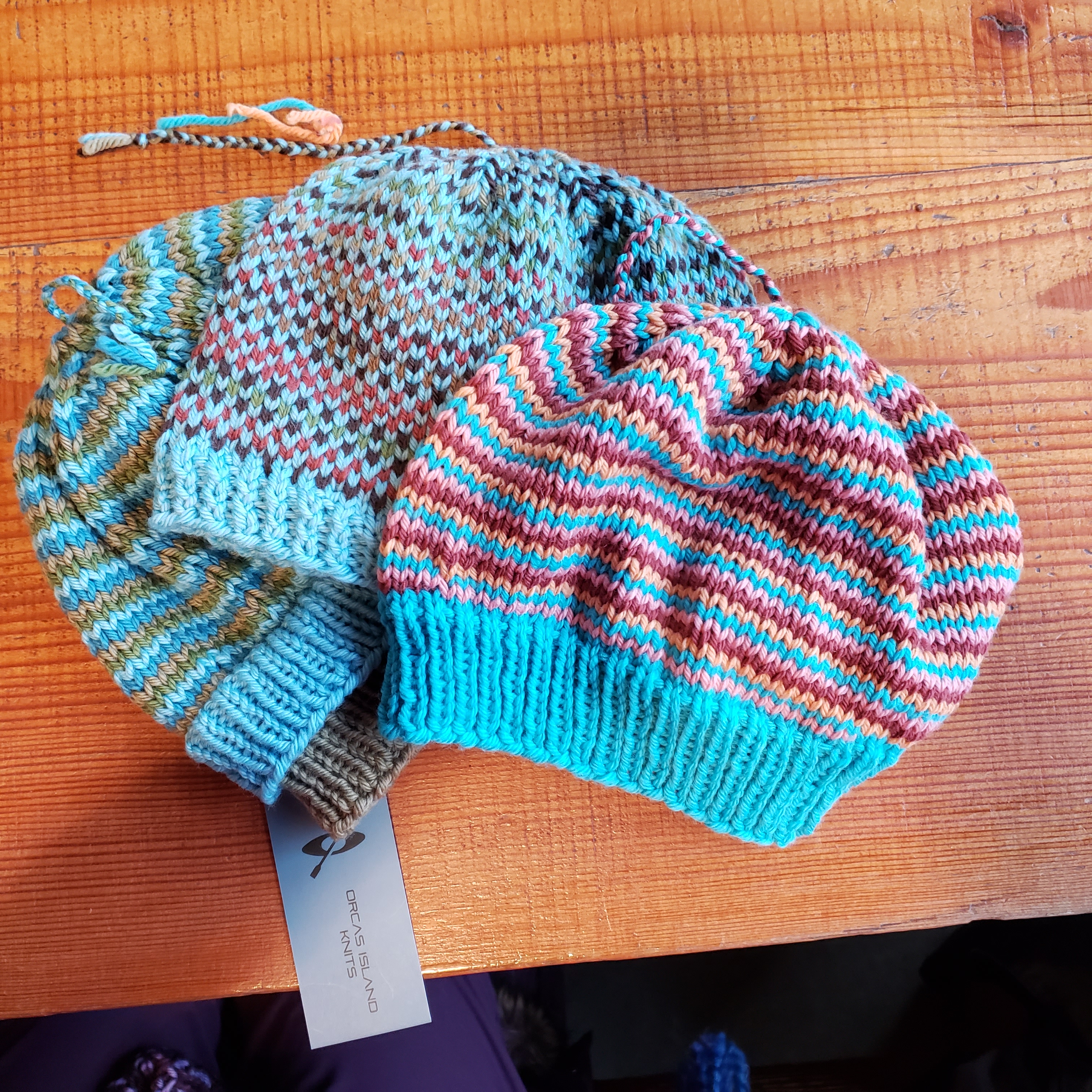
Sea Glass Hat Knitted as a Swatch for a T-Shirt
Important things to consider:
If you do do this, it is important that the items be good quality. Before this opportunity came up, I’d been stockpiling hats to sell at my LYS. And eventually, I’ll do that. The upshot is they were “sellable” quality items. This means that donating them, alongside the men and women in my knitting group, is a meaningful gesture.
It’s also important that the items be washable. For this reason, I used superwash wool or acrylic for all of the donated items.
How to get started:
Our donation was organized by a member in order to keep it local, but I’ve also found great joy in knitting and mailing off red premie hats. And after we got coverage, other groups reached out to us to make suggestions and recommendations. Good acts beget more good acts—a virtuous circle.
Ravelry also has several charity knitting groups. Unfortunately, many of these have gone a bit fallow. So, start a new one and let me know, so I can join!
My knitting group (Yes, we really are called Capitol Hill Knitters of Doom) is always looking for more ideas, so if you have any, please share them in the responses and I’ll pass them along.
I’ve had a love-hate relationship with this sweater. I loved the first version of it. So much so, that I decided to knit another. The pattern was great. I loved the yarn I chose. Why not knit it in another color? The first one took just over 2 months—I started in mid-July 2015. I finished in early September.
Trying to do a seamless version of this
Shaped to fit me
The first one was bottom up. So, I decided the next would be top down. The first one grew—as Madelinetosh is known to do—so this time I’d make it one size smaller. I also wanted it to be just a bit more fitted to my shape and longer. All these things are easy to manage in a top-down sweater.
Fast forward to November 2017, I cast on and started knitting. I had other projects on the needles, so this wasn’t going to be a 2-month sweater. Also, I mostly knit bottom-up sweaters, so I was in ‘learning mode’.
My first problem came in February 2018 with the sleeves. This was a mental thing. I feared that I would not be able to match them as well as the bottom up version, when I knit them 2-up on the same needle. It’s a great trick I learned from a master knitter. So, I set the project down until I could muster the courage to try and figure out how to assure myself they’d be perfect.
Perfect. That word was the issue. And it is something I’m working on with myself–to be okay with not perfect.
In November 2019 a group of other island ladies (friends of Island Wools) on Facebook started a “Finishers Club” for people that had too many WIPs. After sitting on this project for nearly two years, this was the one I put forward for me to finish in lockdown.
The sleeve problem was pretty easy to solve. I used magic loop. In retrospect, this was a no-brainer. I knit two up socks all the time, so why not the sleeves in the round?
The next issue I discovered was after I thought the sweater was done—I’d failed to use a smaller needle on the collar and it was HUGE.
This collar is not for the faint of heart. Sure, it’s garter and therefore boring. But it’s also 270 stitches. Each row is as wide as an afghan. I “finish” only to find that the collar hung to me knees. I looked at various ways to “fix” it. None was viable. The collar had to come off.
This is when having a group helps. You told people you’d do it and that motivates you to keep going, especially when you see them knocking off theirs. I did work on other WIPs in the meantime (including an afghan). But this was the “call out” project. So after I unknit the collar. I immediately (okay, more like three weeks later) cast back on with the right-size needle.
This problem isn’t about perfectionism, it’s about the reason I wanted a second sweater of the same type. I knew that if I didn’t fix it, I would not wear it.
Having groups to keep you going is a boon. And lockdown helped too.
What gets you started again after you’ve put something down?
Many patterns specify a yarn and number of skeins, rather than yardage making substitution difficult. This post is designed to help you use vintage or any yarn on which you have little information.
I’ll be outlining ways to get yarn weight, yardage and care in order to make informed substitutions. This is especially relevant to me, since I inherited a huge stash of wool from my grandmother when she forgot how to knit when she developed Alzheimer’s.
It seemed like I had a lot of this yarn. My grandmother had 17 skeins (!) in her stash. But that turned out not to be the case. They are on cardboard spools–so there is more air than yarn. I’m also dealing with three different dye lots and minor sun damage. Grandma was a penny-pincher and often bought remainders, smoke/fire damaged and sun damaged, and unlabeled yarns at bargain prices. This is only one example of many “problem children” from her stash.
Getting the Weight:
What you will need:
Yarns of several weights that follows the standard yarn weighting accepted today. I generally rely on Cascade Yarn for this, but any major yarn manufacturer will do.
Appropriately sized needles for the weights.
Methods:
Twist method: I learned this several decades ago in a class, I believe, Lily Chin taught at one of the early Stitches West. This is where you take a yarn that is a good standard for different weights of yarn.
The trick here is to have lots of “known good” weights of yarn. I have loads of leftovers that work perfect for this.
You hook the yarns around one another and then twist in opposite directions. If there is a “smooth” transition when you run your fingers across the join, you have likely found your closest yarn weight.
For the Peacock, I started with a DK, then tried a worsted, aran and bulky. What I learned was that because of the variance in the yarn, it ranges from worsted to aran and it is too big for DK and too small for bulky.
Gauge swatch: Now that we have an approximate weight. I recommend knitting a gauge swatch of the matching weight yarn and your “unknown” using the same needles. Measure and compare the swatches.
If they have the same stitches to the inch, you are done. If not, knit a swatch with the yarn that is one size up if your mystery swatch has fewer stitches or one size down if your mystery swatch had more stitches to the inch.
And keep your swatch of the unknown yarn. It will come in handy for determining the care.
Getting the Yardage:
What you will need:
A yarn swift (I’ve also used chair backs–anything you can measure around)
Flexible measuring tape
If the yarn is in a skein, a yarn bowl or way to hold it steady while you wind it onto a swift
Method:
If yarn is in a hank, place it on the swift and extend the swift to the maximum size; If yarn is a skein, wind yarn onto the swift (Steps 1 and 3 in image below)
Measure around the swift (Steps 2 and 4 in image below)
Count the number of strands (step 5)
Multiply the number of strands by the number of inches (e.g., 50 strands time 60 inches) and divide by 36 (inches in a yard) (not shown)
In my case, I got 50 strands at 60 inches, so that’s 3,000 inches of yarn. I divided this by 36, to get ~83.33 yards. Keep in mind, yarn is sold by weight not length, so you shouldn’t expect to get a round number. After getting the yardage, I wound it back into a skein (Step 6).
With 17 skeins I actually only have about 1400 yards total and only 833 yards of a single dye lot.
Getting the Care:
As you can see from the yarn label, it says to wash in temperature 30 (F or C?), it is possible to use an iron and it is possible to wash with most detergents, but not bleach. This still leaves a lot of missing information.
There are three (maybe more) ways to determine how to launder the fabric you create with this yarn. They are as follows:
Look on the label. Sometimes “superwash” or similar phrases are there. In my case the yarn came with symbols and these can be looked up online. I’ve included the reference chart below.
Look at yarns with similar composition. On Ravelry there are wealth of yarns which have this information. If you find one of similar percentages, you came mostly rely on this information.
The most foolproof way is to swatch (the same one you made for gauge) and do to it anything you might do with the finished item. Wash, it dry it, dye it, bleach it, etc.
Dealing with Multiple Dye Lots or Sun Damage:
The easiest way to deal with inconsistent dying or sun damage is to group them by color and alternate in your most different skeins, every other row. Another thing that works very well is blending it with another yarn for a marled look. If the color problem is minor, it will be invisible.
Do Try This At Home
It can be hard, these days, to get to your LYS. So, I hope this post helps you use up more of the yarn you already have. I’ll be posting an afghan I’m working where I’m blending vintage yarns in an effort to get something both useful and beautiful by using up my grandmother’s stash.
I LOVE brioche—both the stitch and the bread. I fell in love with fabric the moment I found it in a Vogue Knitting pattern from the Winter 1998/1999 edition. It was pattern #10 which sadly is not online, so I’m happy to have the printed magazine.
Brioche was not new 20+ years ago when I discovered it. It’s been around for centuries and is believed to have originated in the Netherlands for fisherman sweaters. Think Aran Isle only Dutch.
In the hunt to find projects to use up odds and ends of my stash, I looked back at a previous post I made on simplified brioche knitting, but many of the links no longer worked, so this is an update to that post as well as a free scarf pattern in case you want to try it for creating stretchy, beautiful knitwear.
Brioche is almost as simple as garter because it is the same and knitted both directions. And brioche is far stretchier than a standard rib. This means that it will stretch farther sideways than rib patterns. Which makes it great for a horizontal piece, but not good for a vertical one. I learned this the hard way.
As you know, there are loads of Brioche patterns, but few stand out as good references. The good ones use standard knitting terminology instead of BRKs, BRPs, etc. I call these the “brioche without tears” patterns.
Simple Brioche Instructions
In single color, flat brioche, all rows are the same—no matter which way the work is facing. Only the setup and bind off rows are different.
Across any even number of stitches:
Setup Row: (prep for pattern rows) *K1, yarnover (yo), slip 1 purlwise; repeat from * to end of row
Pattern Rows: (repeated row) *K2tog (the slip 1 and yo of the previous row), yo, sl1; repeat from * to end of row
Final Row: (prep for bind off) *K2tog P1* repeat across
Cast off: in pattern (K1, P1)
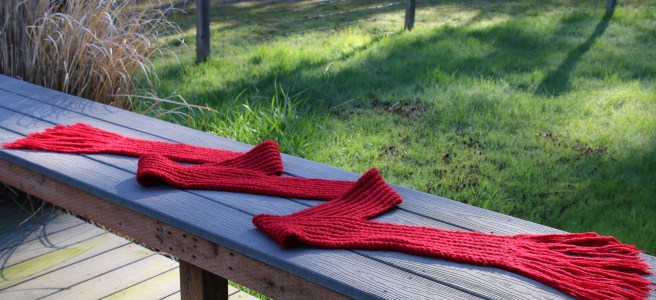
Below is a pattern for a super quick knit scarf that I call 12 Feet of Love. It’s knit in a discontinued yarn called Kitten, by Reynolds, a wool-blend that creates a slightly fuzzy, bumpy fabric that was popular in the 80’s.
This pattern can be any length, width or use any yarn you desire. This makes it a great stash buster project.
Length: As the title suggests, the project I knit was 12 feet including fringe. You can stop at your desired length.
Width: I you want a wider scarf; you can make it wider simply add pairs of (2) stitches until it is the desired width.
Yarn: I used Aran, but this pattern works for any yarn weight. If you use a thinner yarn, add more pairs of stitches, a thicker yarn will require a pair or two less. The best thing is to knit a gauge swatch with the whatever yarn you plan to use.
Supplies:
Needles: Size 9 or whatever gives you the appropriate or preferred gauge.
Yarn: I used 600-700 yards of Aran weight
Darning needle to weave in ends.
Directions:
Cast on 16 stitches.
Start setup row: *K1, yarnover (yo), slip 1 purlwise; repeat from * to end of row
Next row and every row after: *K2tog (the slip 1 and yo of the previous row), yo, sl1; repeat from * to end of row
When the scarf is the desired length, do bind off prep row: P1, K2tog across
Bind off 16 remaining stitches
Weave in ends
If desired, add fringe and trim to preferred length
What’s Next?
I hope the reference is useful for you. I’ll probably expand it to include more and more “conversions” as more as more simple brioche patterns (once again) are made available.
My next big thing is two-color brioche and it turns out that knitting brioche in the round is even easier than two-color brioche flat. Below are a pattern and a video to help without a BRK or BRP in sight!
Dyed in the Wool by Spincycle Yarns in Shades of Earth
The trouble began when my husband wore them. The yarn literally broke in places. In one day, the ribbing popped at the top and a hole appeared in the instep. I was, to say the least, bummed. This wool was not good sock yarn.
I frogged them back to skeins and looked to see if I could pair them with nylon thread, but that made a tangled mess when I made attempt #2.
Frogged Balls of Wool and the Start of My Gauge Swatch
With all the stash reduction plans, I went through and catalogued my whole stash. When I came across these lonely skeins, I just couldn’t help myself. With so many big projects and requests looming, that will take *forever*, I felt like I needed “a win”; something beautiful and something quick.
The Bias Scarf pattern, by Shelby Dyas is great free pattern designed for eating up stash. I already had it in my queue with a different pair of yarns. I wasn’t expecting to do it with just one yarn, even though the designer did. What she chose was a variable yarn made from torn up silk saris.
One good (and bad) thing about DITW yarn is that the weight varies a lot (from sock to sport weight) as does the color, so even though I tried to purchase similar looking balls, they are very different.
In a bias scarf variability just works. And because it won’t be in shoes and worn so heavily, the lack of durability will be much less of an issue.
Up Close Detail of the Color Variation
Lemonade from lemons! I’m not done yet, but even as a work in progress, I think this might be the prettiest scarf I’ve ever knit.
Last week was Paris fashion week and though I’m a practical knitter, I like to view the Fall collections since that’s usually when designers show knits. Not so much this year. It seems that funny hats, brown latex, poofy sleeves and sloppy fits are “in”. If you are curious, Paris Fashion Week Instagram showed a good variety of looks: https://www.instagram.com/parisfashionweek/.
Part of the reason to scour the looks was to break out of a knitting funk, since all my projects seem long and boring. On the needles are requests: an afghan for mom, another pair of socks for a friend, and a wrap made of tiny yarns on tiny needles. If keep on this tack, I won’t be using up any of yarn I’d hoped to destash, and I won’t hit my goal of 20 completes this year.
Mom selected this yarn for an afghan
Lang Jawoll Color Jaquard–the varied
Tiny yarn for a big wrap
Last night, I found myself looking at the inventory (online) of two of my local yarn shops (LYS) for inspiration. I even thought to drop by, because retail therapy is what I do when I feel the need for something “fresh”. The queue gets longer; the stash grows; more WIPs.
Frustrated by fashion, fatigued by projects on the needles, I went to my stash to stop myself from breaking my New Years’ resolution not to buy more yarn. As expected, I was instantly overwhelmed by the sheer volume—and the ideas came pouring out.
An Inspirational Disaster Area
All the inspiration I need is there. Now, I’m wishing for more hands and more time to knit it all up!
In the run-up to Spring knitting events I went through all my yarn, notions and needles. The purpose was to remind me what I have, so that I wouldn’t double (and sometimes triple or quadruple) my supplies.
The most challenging thing was being a “weekender” on Orcas Island is that my knitting goodies were not in one place. Fixing that took some coordination, but to reduce extra spending, it was well worth the effort.
Nick enjoying the sunset at West Beach in his “Island Sweater” knit with local wool from island sheep.
I’d like to have my yarn and supplies on Orcas Island since I knit more there or on my commute to and from. However, I do more project planning on the mainland. So, when I had to decide where to take inventory, it made sense to move to the smaller concentration to the higher.
It’s no surprise that I have a terrifying amount of yarn (it actually was… a bit), as most of my stash had been logged in Ravelry. What surprised me most was the quantity of needles and notions. Partly this is because I pick them up as I travel and partly it is because I inherited loads from my grandmother along with her stash. Some of these notions are antiques—which I will not part with—but an equal amount went into the donate pile along with some my own purchases.
Old plastic needles–handy for travel
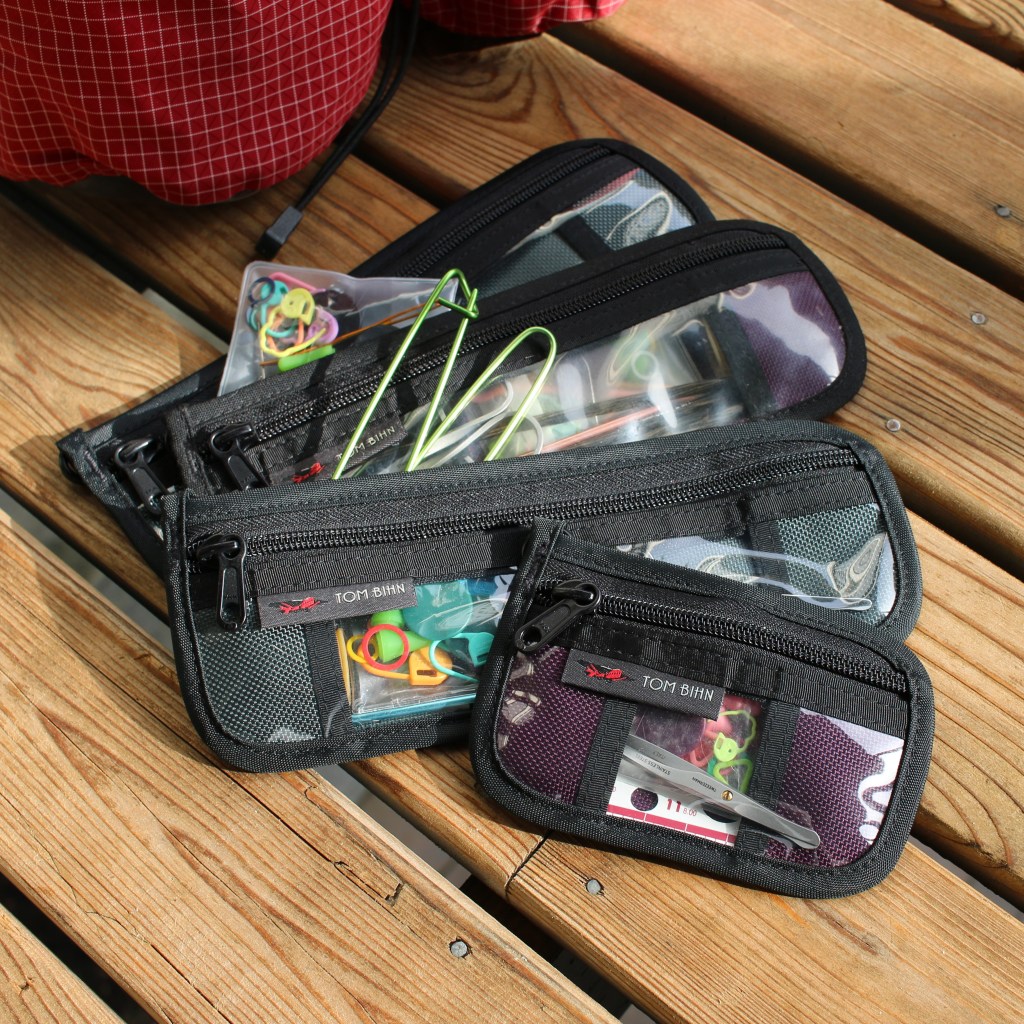
Probably the best thing to come out of sorting all of my bibs and bobs was the creation of small organized packets of notion kits—four in total—so that I have virtually everything I need to hand, whether it is in the car, island or mainland, or for traveling with individual projects. Some well-chosen Tom Bihn knitting organizers really helped.
Tom Bihn is a local bag maker in SeaTac, who in addition to luggage, makes specialized knitting bags and accessories. And if the luggage at Red Alder Fiber Arts Retreat is any indication, both types of bags are very popular among the knitting community.
Small Tom Bihn Knitting Organizers
Tom Bihn luggage and knitting bags
Anyone else doing Spring notions cleaning? Any interesting organizational ideas?
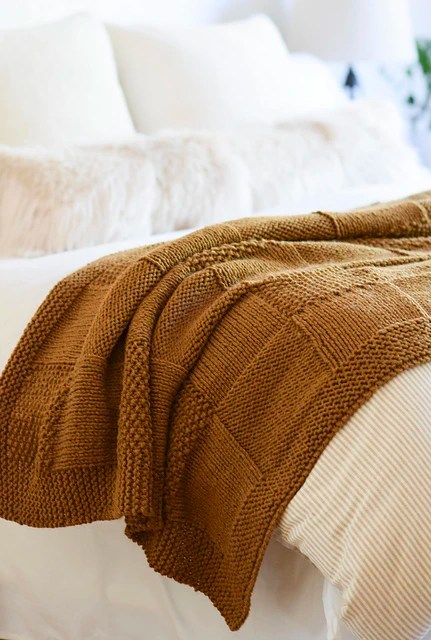
For most of my life, I’ve been a sweater knitter. I think this is because my grandmother, who taught me to knit, was a prolific knitter of sweaters—30+ a year. She also made afghans, but not as many because she’d get bored. To keep things interesting, she’d choose intricate patterns with bells and baubles. When I think of the ‘lost art of knitting’ it’s these fancy items that come to mind.
What’s amazing is after my grandmother stopped knitting, there was only one work in progress in her stash. She was a finisher, but later in life she became ill with Alzheimer’s and literally forgot how to knit. At some point, she thought if she didn’t have the yarn, she’d be less likely to want to pick up a project. And this would reduce her torment of starting and not knowing how to keep going. Except, of course, for the times she forgot that she’d forgotten how to knit.
This is how I came to ‘inherit’ a huge amount of yarn more than 10 years years before she passed away at 90 years old.
As a knitter, to forget how to weild your craft seems like the ultimate punishment. If it were me, I’d do what she did–find someone to inspire. And boy did she have a lot of inspiration to share! She’d been collecting for years and with every store closing or fire sale, her stash grew and grew until it overwhelmed her house.
As her memory faded, my grandfather reminded her that I was a knitter. So, she called and asked me to drive from Arizona, home to Idaho, to take away her stash. When I arrived, my grandmother told me it “made her sick” to look at it. She kept asking me, “you’ll use it won’t you?” at least a dozen times. “I just don’t want to see it go to waste.” I assured her it wouldn’t, and I meant it.
Then, as now, I am intensely grateful for the gift of her stash which I’ve knit into all kinds of things.
Cotton Smitten t-shirt
Viscose and Wool Bias scarf
Linen Funnelneck Vest
Italian silk Leftie Scarf
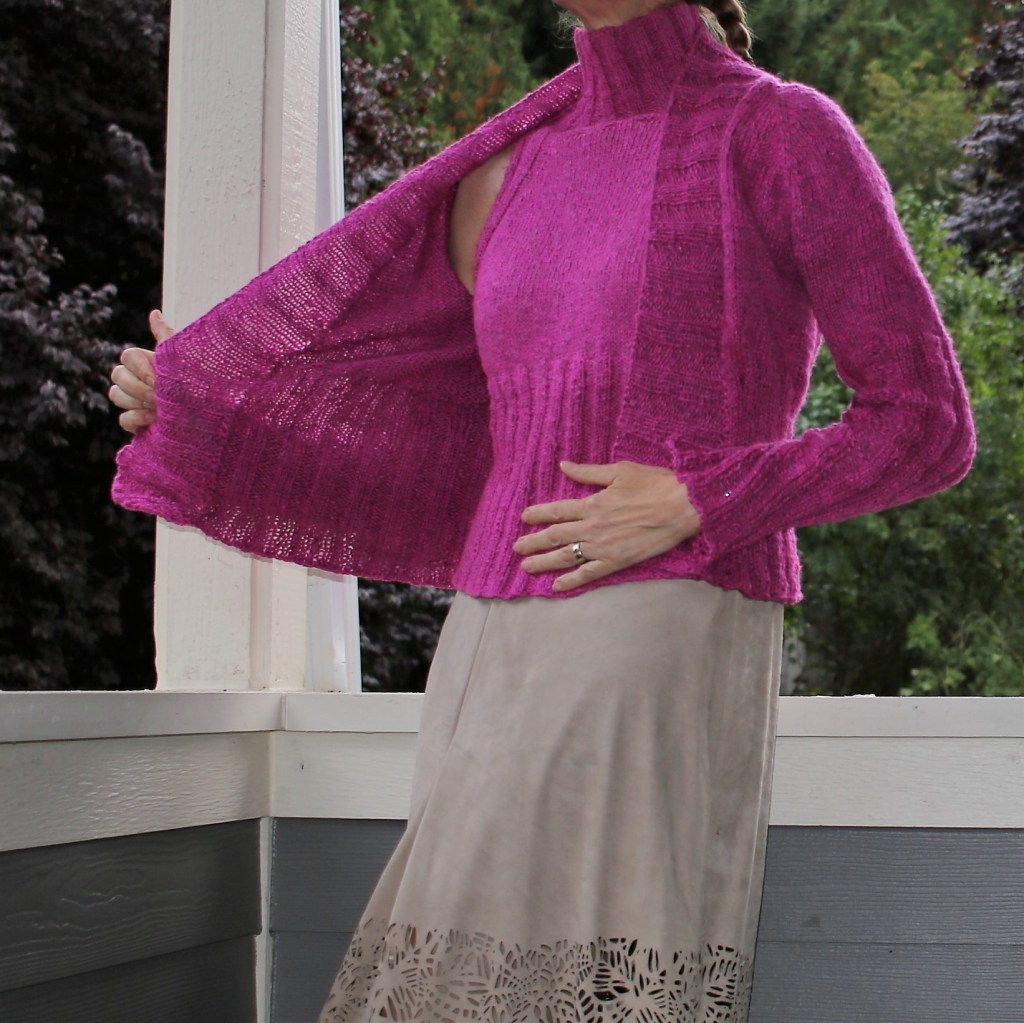
Linen Fuchsia Funnelneck Twinset
Wool Wurm Hat
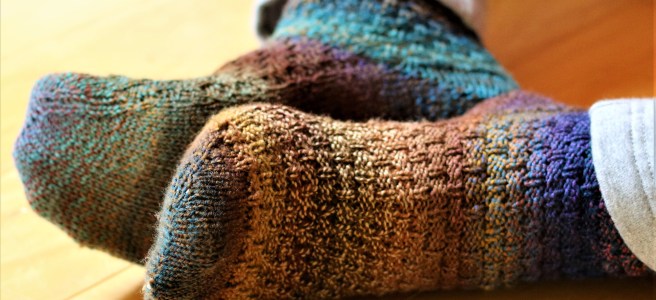
Wool ‘Ski Crepe’ socks
Cotton Raglan Mock Turtleneck
Viscose and linen Leftie
At that time, I would never, at that time, have been able to afford these yarns—not even the synthetics. Overnight, my nonexistent stash bulged with wools, silks, angora, cottons and linens as well. Most of it odds and ends, because she never knit with more than one yarn or color at a time. Since I do, her leftovers work just fine.
In this new year–new decade–in fact, I am challenging myself to put the remaining yarn to the best possible use. There will be difficulties, as many of them have no yardage or care information. It will also be fun figure how I can best use this gift of yarn to its best advantage.























 Orcas Island Knitting