A Survey-Based Key for Holding Two Strands Together

Holding two strands of yarn together can result in beautiful projects. Lately I’ve been drawing inspiration from the KnitPicks book, Better Together: Marled Knits Collection (there’s one for crochet too!).
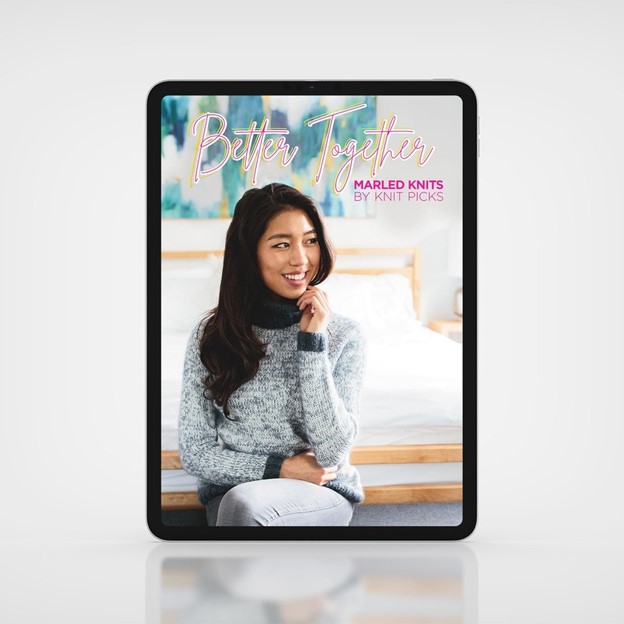
Photo © KnitPicks

In a previous post, I created a table based on collating data three yarn manufacturer’s websites. I found it helpful, but I also found it didn’t map to patterns I was using (based on pattern gauge). It also lacked needle sizing which has a huge impact on what yarn weight you end up with when it’s held double.

So, I put my scientific skills to work and did a Ravelry pattern survey and created a table that includes needle sizing and more designer detail. The methodology can be found at the end of the blog. This was much tougher than collating three sites, I had to look at every pattern doubled in every weight to collect needle sizes and confirm gauge accuracy.

As a teaser, I’m now working on a survey for three yarns held together as well as holding differing weights of yarns together (in twos and threes). Compiling this data is no small task, so please be patient!

First, a map of yarn weights collated from various knitting websites (which don’t necessarily correspond to patterns either!). This is how patterns were “mapped” to yarn weights.

GuideCommon namesSts over 4” or 10cm
Thread*Thread44+ stitches
Cobweb*Cobweb40+ stitches

Lace
Lace, light fingering33-40 stitches

Super fine
Fingering, sock, baby27-32 stitches

Fine
Sport, baby, light DK23-26 stitches

Light
DK, light worsted21-24 stitches

Medium
Worsted, Afghan, Aran16-20 stitches

Bulky
Bulky, chunky, craft, rug12-15 stitches

Super bulky
Super bulky, super chunky, roving7-11 stitches

Jumbo
Jumbo, roving6 stitches or less

* There is a lot of variation in cobweb weight. I believe this is because it isn’t considered a “standard weight, which is why there’s no “yarn skein” provided by knitting and crochet sites. The thread weight was more consistent, but there are few patterns for it.

‡ Overlap of number of stitches with other yarn weights is intentional and consistent with the original sources.

Table for Yarns Held Double

The most likely weight is shown in bold.

Single WeightDoubled WeightNeedle Sizes Range# Patterns
ThreadCobweb1-43
ThreadLace5-73
ThreadLight fingering8-105
CobwebLace2.5-818
CobwebLight fingering5-107
CobwebFingering7-105
LaceLight fingering2.5-34
LaceFingering3-510
LaceSport5-812
LaceDK7-94
Light fingeringFingering2.5-54
Light fingeringSport4-911
Light fingeringDK6-815
FingeringSport3-79
FingeringDK6-916
FingeringWorsted8-105
SportDK3-75
SportWorsted7-1010
SportAran8-10.513
SportBulky10-152
DK/Lt. WorstedWorsted3-57
DK/Lt. WorstedAran6-1017
DK/Lt. WorstedBulky10-155
DK/Lt. WorstedSuper Bulky191
WorstedAran6-812
WorstedBulky8-1115
WorstedSuper Bulky13-193
AranBulky8-10.511
AranSuper Bulky11-1713
AranJumbo19,35,506
BulkySuper Bulky11-1718
BulkyJumbo19,35,5012
Super BulkyJumbo13-19, 35, 5030

Methodology:

  • Ravelry filters were used to narrow the patterns to each yarn weight held double. Since they do not allow you to say which direction, a search for “sport” + “held double” gives you both: “sport + sport = Aran” and “fingering + fingering = sport”. I would switch from the beginning to the end pages to avoid double counting patterns.
  • 30 patterns for each weight were collated, except for thread (there were only 11 on Ravelry).
  • Some patterns claimed doubled yarn weights which do not match the listed gauge (e.g. Jumbo listed as 8 stitches over 4” maps rather to Super Bulky). For consistency, I only used patterns that provided gauge for the knitted item and mapped that to the first table.
  • Smooth (and consistently sized fuzzy) yarns only. Bouclé and other variable weight yarns were excluded.
  • Stockinette where possible for consistency—though in large weights (Super Bulky and Jumbo), garter was included to get a sufficient survey count of 30 patterns.
  • Needle weights were ranges selected from the patterns surveyed. Needle sizes that were huge on small yarns were largely excluded due to “bonkers” (a technical term) variability inconsistent from other patterns.
  • Since DK overlaps with Sport, I used the designer’s choice, rather than pattern gauge.
Words for the New Year

This past week or so I knit and frogged the same sweater multiple times. And before you ask, yes, I swatched.

Am I annoyed? A bit. But I’d rather not repeat the experience I had this past year, in throwing out a garment–yarn and all–that I spent months designing and making after nothing I tried could salvage it.

The new project is Altiplano by Berroco. It’s a pretty reverse-stockinette top designed for a specialty yarn called Mykonos.

Altiplano means river basin and Mykonos is, of course, in Greece.

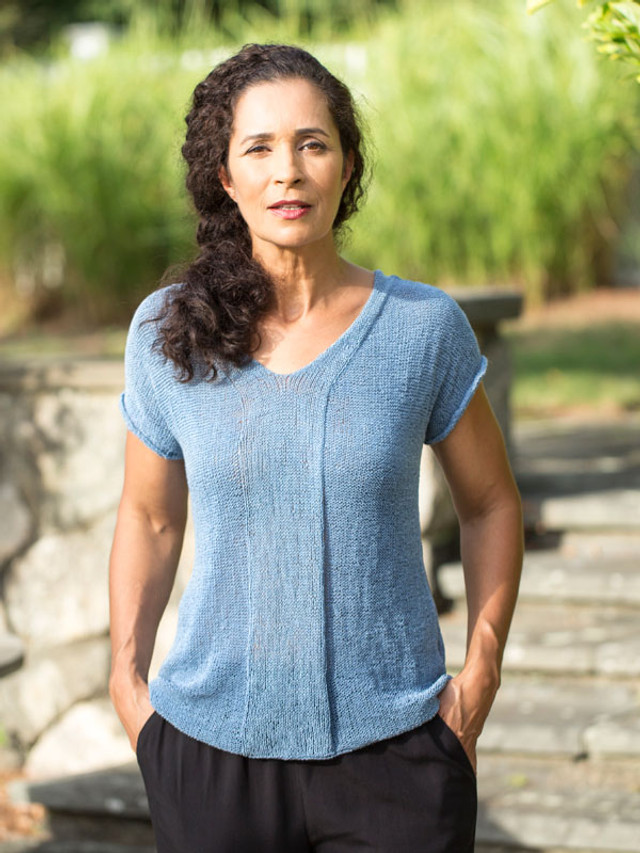
As others in Ravelry pointed out, I was aware the pattern has sizing problems—even if you match gauge. I discovered other issues which are visible in the photo (rolling bottom/sleeve edge and collar). When it didn’t work for the recommended yarn, I tried two others with similar results.

Now that I’m certain the issues aren’t yarn related, I’m going to try again with Mykonos whilst making needed modifications I picked up while I “firkled”.

If you’ve never heard of the verb “to firkle” it’s a new word added to the lexicon in 2024 from an Antarctica research station. It means to mess around until you sort it out. You can find this and the other 10 words highlighted by the BBC for 2024 here. A fun New Years’ read.

And doesn’t “firkle” just sum up working at fiber art to a tee? It’s my new favorite word.

Happy New Year and Happy Knitting!

Analysis Paralysis

It’s been a big year for a lot of things. Well, everything except knitting. I made quite a few pairs of socks, due to the portability on my extensive travels. But I’m a bit bored with socks now—even with the additional texture work.

I’m ready for something bigger and bolder. But I’m stuck.

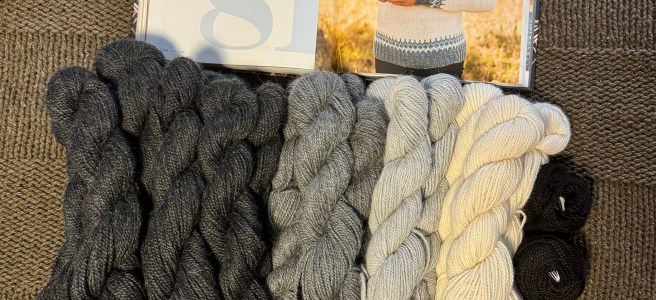
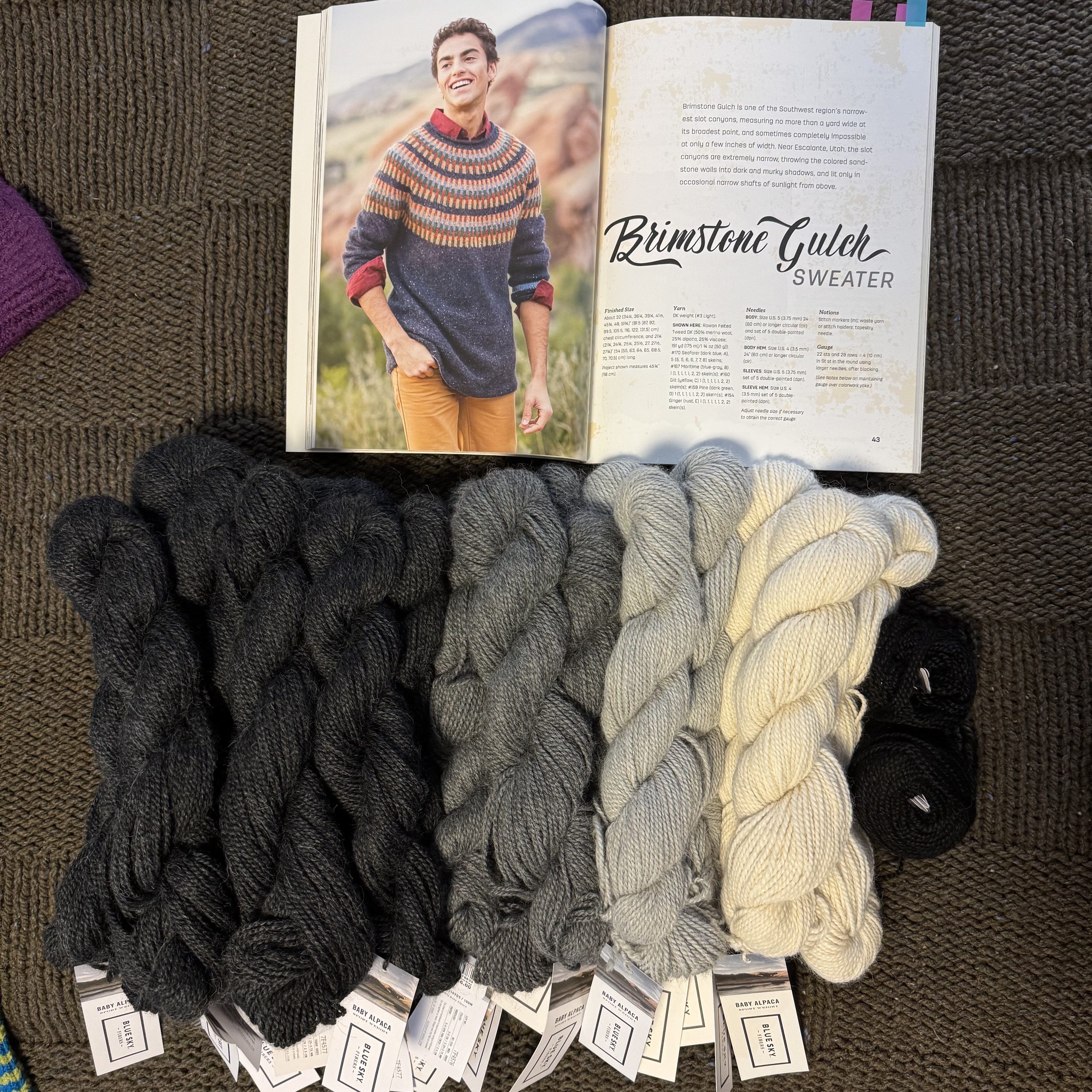
I’ve been spending lots of time on Ravelry dreaming and filling up my queue. The problem is I’m not knitting, I’m just doing a lot of creative dreaming and getting nowhere–fast! And lately I’ve been on a yarn buying spree, especially Blue Sky Fibers’ Baby Alpaca. I’m up to 7 (!) colors now.

My questions for you are:

  1. Do you ever get stuck in planning mode, and if yes why?; and
  2. How the heck do you jar yourself out if it?

I guess that’s 2.5 questions. 😊

PS: The project I’m trying to sort out is a yoked sweater and I’m choosing between two Interweave patterns I have: the Brimstone Gulch or Meltwater Pullover in Icelandic colors (see below). And suddenly, I’m looking up patterns for palazzo pants. Geez!

PPS: He chose Option 2. I’d better get winding.

On the Road Again

During Covid lockdown, I loved the quiet solitude that it afforded. After all, I live in a place many consider a destination. And who’d have thought I’d miss the work travel? Not me, but I do.

When I got back from my last jaunt to the southern hemisphere, the same day I was out working in my garden. A lady stopped by to tell me how lovely my yard looked. Honestly, it’s a bit self-sustaining, so it’s hard to take credit, so I told her I’d been away for a month.

She asked, “Where does someone who lives here go on vacation?”

“Antarctica.” I answered.

“That makes sense.” She answered.

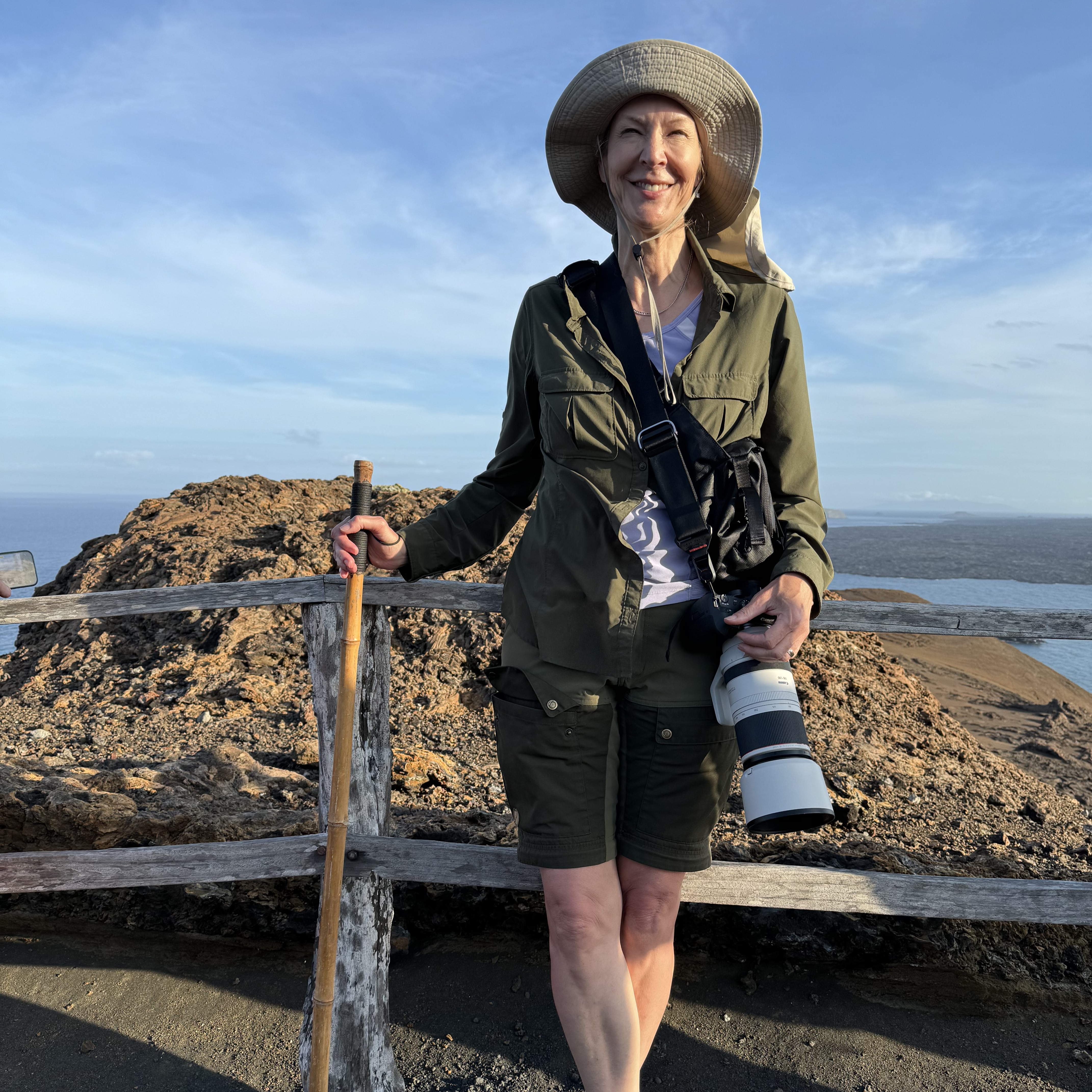
What I didn’t say was I was already plotting another month away to Machu Pichu, the Galapagos and the head waters of the Amazon (Napo River). Unlike my last trip, there was no knitting by the crew. And I didn’t do much either. Just a pair of socks and another project that failed to become anything.

What I’ve been doing is photography. Mostly birds and butterflies.

Which is not to say I haven’t been knitting since I got back. I’m sending a gray wool and silk throw to my niece I have finished, and I have a WIP using the vintage wool I referred to in this post. I didn’t have enough for a throw as some suggested, so I’m making the fitted jacket.

So, what and where next?

Though I’ve traveled a lot of places, I’ve never been to Central America. And as if by magic a “reset cruise” popped up. This is when a company moves a ship from one ocean to the other. It has more “at sea” days, but is managing to make some stops in Mexico, Guatemala, Costa Rica, Panama and Columbia, among other places. My real goal is to get fit after a severe shoulder injury.

Being retired, I can jump onto these trips at a last minute as a solo traveler at bargain prices. So, I’m back to plotting what to take to knit on this upcoming trip in three weeks’ time. Socks for certain, but I have a DK weight top I’m thinking about taking as well.

Socks really are my go-to travel project, even though there was a time I swore I’d never knit another pair, I’ve always got a pair on the needles these days. I’ll have to post some photos of my more recent ones.

I’m thinking I’d like to get more of a discussion going and might start posing knitting questions for you. Tell me what you think in the comments.

Cheers!

The Fresh Scent of Old Wool

The smell of sheep is heady as I slide the yarn out of its sleeve. I’m reluctant as I put the first of 23 skeins on the swift for winding. It’s old yarn. Probably spun before I was born; back when Bear Brand Yarns, USA was still a going concern.

The labels are in good nick, which gives me another pang of guilt. It says, “Permanently Mothproofed” and “Knits in a Jiffy on Big Needles”. It calls the yarn Four Seasons and that it’s a “washable” color. Though the care instructions tell a different story. This yarn will likely felt if not washed carefully by hand.

Bear Brand Four Seasons vintage yarn in a rich teal

The color is surprising—a lovely teal that you don’t often see in vintage yarns. Looking closely, it’s a consistent, solid color, mildly heathered only because it is 100% pure fleece wool. There’s none of the color variation you get with newer yarns or unrelenting fixed color of acrylic. It’s a color I gravitate to when purchasing new yarn and yet I’ve kept it “as is” for more than 25 years, since my grandmother stopped knitting like a treasured antique.

It is that—a treasure. But to leave it unused doesn’t feel right. And in this new year, I want to change that.

As I turn the winder, the smell of sheep brings back memories. I hear my grandmother telling me to be careful putting the hanks on back-to-back chairs for winding. She owned a winder, but not a swift, but she’s most often wind balls by hand because it was “too much trouble to get that contraption” out.

As the 23 small cakes build up (only 71 yards each) these skeins are in the phase of becoming. And that by caking them, they are that much closer to being something warm and loved, instead of languishing in a box, waiting to be used.

Now to choose a project. A blanket or a sweater? It’s a tough choice. Thoughts?

Updating the Queue for an Inspired 2024

In 2022, I took a year off from my “Buy No New Yarn” fast. The result was that I knit twice as many projects than I had in any previous year. Let’s face it. Touching feeling and smelling fresh fiber is part of the inspiration that drives us as fiber artists.

In 2023, I went back on my “yarn buying fast”. Did this impact my creativity? Possibly, but it was only one of many reasons.

It’s been a tough year. Some of the highlights were catching Covid (twice, once severely), being my parent’s 24/7 carer for 5 weeks, a water heater failure, black mold, rats and repair/remodeling fails.

With my knitting time curtailed, I only completed 9 projects (shown here)—mainly simple and small scrappy items. The upside: everything started was finished. The downside: at one point there was nothing on my needles for weeks. It felt odd and a bit scary to be “stuck” for inspiration.

I’m bursting with enthusiasm for 2024.

Will I keep the yarn fast going? Maybe, but it won’t be a rule. So far, I’m focused on “shopping” through the amazing yarns in my stash. These have been paired with beautiful patterns already in my library—ones I’ve wanted to make for years.

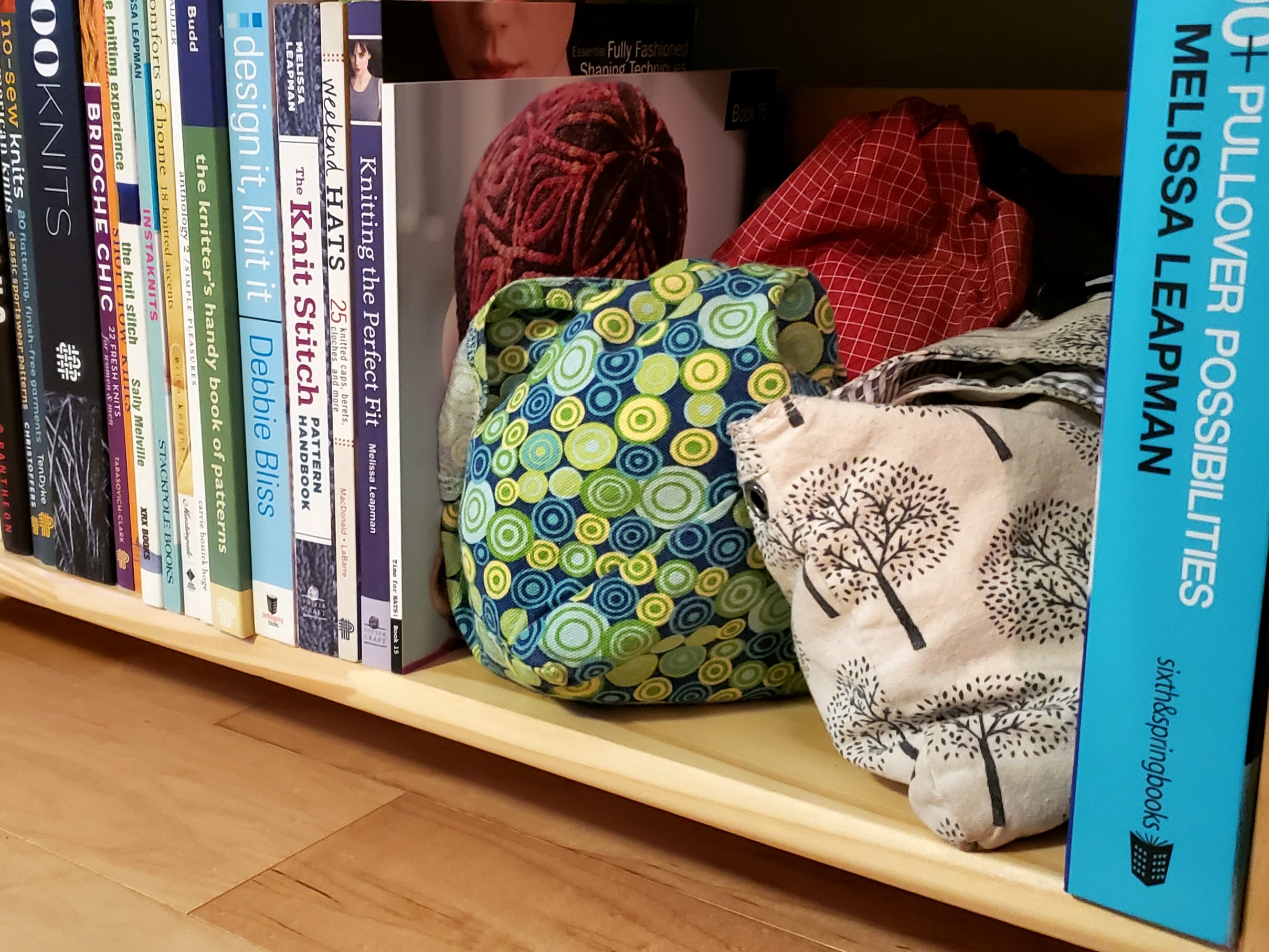
What’s helped is that my stash and library are (now) within arm’s reach. My library is in a bookshelf next to my bed. My stash in my closet. To get up and get dressed is to be surrounded by inspiration.  

I also decided to stop saving scraps of yarn (less than 100 yards) and removed a lot scrappy projects from my queue. Too often they felt like things I “should” knit as opposed to making things I want to knit.

Alongside new projects, I queued ones I’ve made and loved. If you loved a project, why not make it again in a different color or yarn weight? Just swatch until you get the right gauge/color scheme.  

I’m also adopting the mindset that more isn’t better. Better is better. And what’s better than doing the projects that inspire you?

Joyful Patterns – AKA Downsizing Your Library

When my husband and I moved last summer to a place half the size of our previous home, we had a rule, no boxes move unopened. We both had boxes in the garage (mine) and in a storage unit (his), that had not been opened in two or more moves, most from before we moved in together.  

To decide what to keep and what to save, we had to see it all. What followed was a tiring three-month process of narrowing down everything we owned to the things we felt we needed—with a few exceptions. For me the exception was knitting books and supplies.

As I’ve been working on my latest sweater, I’ve been power watching Marie Kondo’s show on Netflix, Tidying Up. In her show, she helps organize everything: clothes, dishes, office supplies, crafts, etc. Regardless of the item, you must touch it and ask, “Does this bring me joy?”

I walked over to my overburdened bookshelves and felt a sense of sadness. Several of my books had never been opened. Most had never been used.

When I looked through them I realized that there was a lot of duplication and some ego involved. Letting them go was a relief. And there was another burst of joy when I removed them from my Ravelry library. I felt like a weight had been lifted!

Marie suggests you thank the items before discarding them and I am truly thankful for the inspiration these books provided–including the knowledge of what books not to buy! I’m also happy to have a foot of space to place pending projects—where the pattern, yarn and needles are ready to go. No more digging them out of storage!

My plan is to take my extra books to my local library or yarn shop. Since Salish Sea Yarn Co opened on the island, there are loads of new knitters on island. So, having some sharable resources can only make that easier for them to pick up their new craft.

Am I brave enough to tackle my stash next? Maybe.

Charity Knitting With the Capitol Hill Knitters of Doom

I meant to talk about it last month, but since a friend of mine already blogged about it, I think I felt a bit like it didn’t matter. We ended up getting a lot of local news coverage (CBS, Seattle Spectator, Capitol Hill Seattle Blog, etc.). It was heartwarming (and body warming) fun!  

In retrospect, I think there are thoughts I can share. For example, beyond charity, reasons why you may wish to consider it.

Fellowship: I loved participating with others in my group. We are not a guild, just a bunch of gals that meet up at a brewery. A common cause to be a force for good made us even more cohesive.

Stashbusting: As I’ve said elsewhere in this blog, I have so. much. yarn. Why not use it for a good cause?

Swatching: You have to be careful here since a hat in the round may not match a flat swatch (the curse of purling). But if you are planning an in-the-round project, as I was, it’s a great test. Or knit a scarf in the new pattern/technique you are trying to perfect.

Joy: It made me happy to think someone in need would be wearing items I made. I love the notion that I may have made a difference. It’s true that woolen socks, hats and scarves only addresses a tiny piece of the challenges facing the unhoused. But there is joy in making whatever contribution you can to those in need.

Important things to consider:

If you do do this, it is important that the items be good quality. Before this opportunity came up, I’d been stockpiling hats to sell at my LYS. And eventually, I’ll do that. The upshot is they were “sellable” quality items. This means that donating them, alongside the men and women in my knitting group, is a meaningful gesture.

It’s also important that the items be washable. For this reason, I used superwash wool or acrylic for all of the donated items.

How to get started:

Our donation was organized by a member in order to keep it local, but I’ve also found great joy in knitting and mailing off red premie hats. And after we got coverage, other groups reached out to us to make suggestions and recommendations. Good acts beget more good acts—a virtuous circle.

Ravelry also has several charity knitting groups. Unfortunately, many of these have gone a bit fallow. So, start a new one and let me know, so I can join!

My knitting group (Yes, we really are called Capitol Hill Knitters of Doom) is always looking for more ideas, so if you have any, please share them in the responses and I’ll pass them along.

Longing for Something Simple

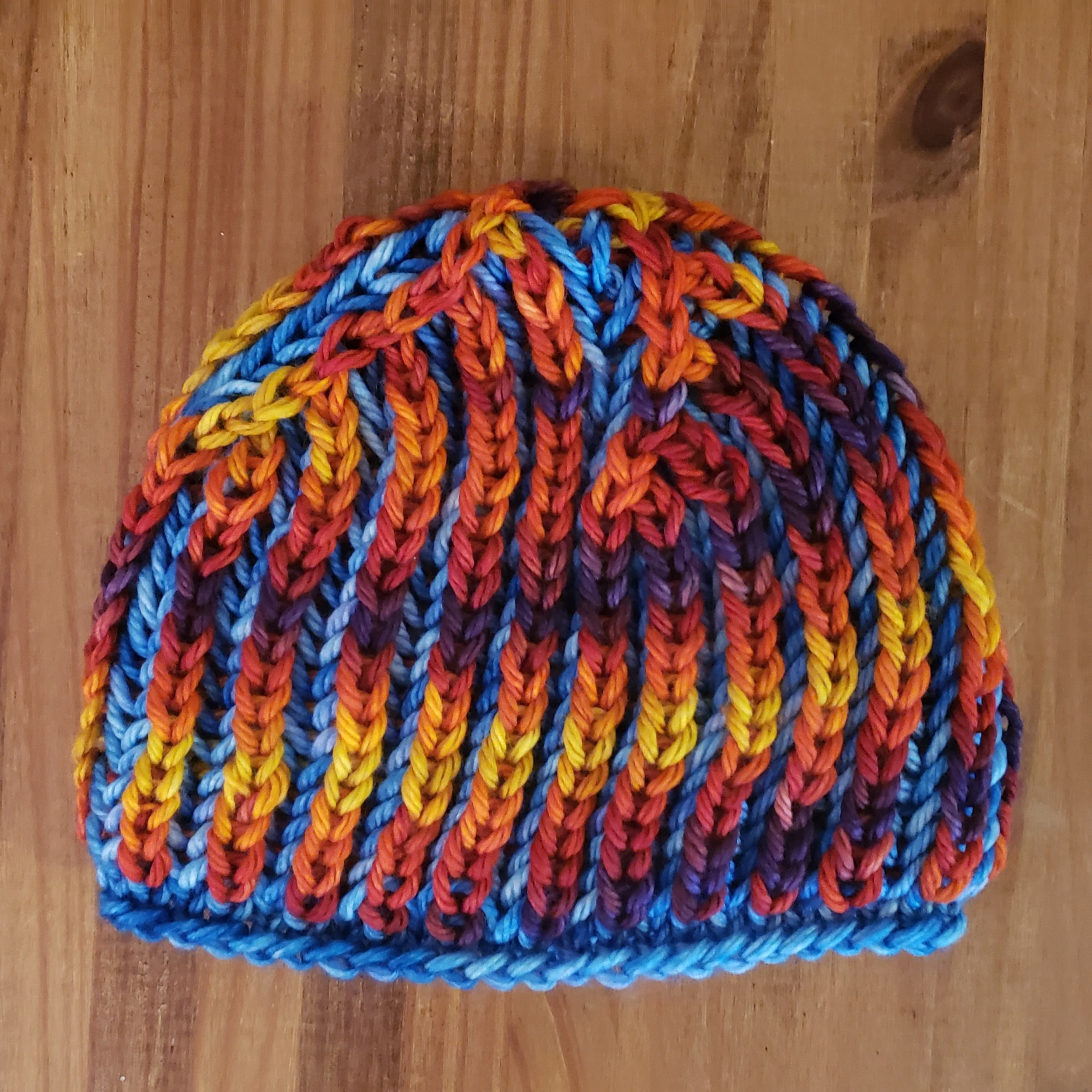
I’ve been on a brioche kick. Thanks to PDXknitterati, I have mastered much of the new nomenclature of brioche, I’ve been on a kick to do a lot of it to cement it into my brain. Keep in mind, I’ve been knitting brioche since I discovered the “Built for Comfort Hoodie” it in Vogue Knitting’s Winter ‘98/‘99 issue (Vol. 16, No. 3).

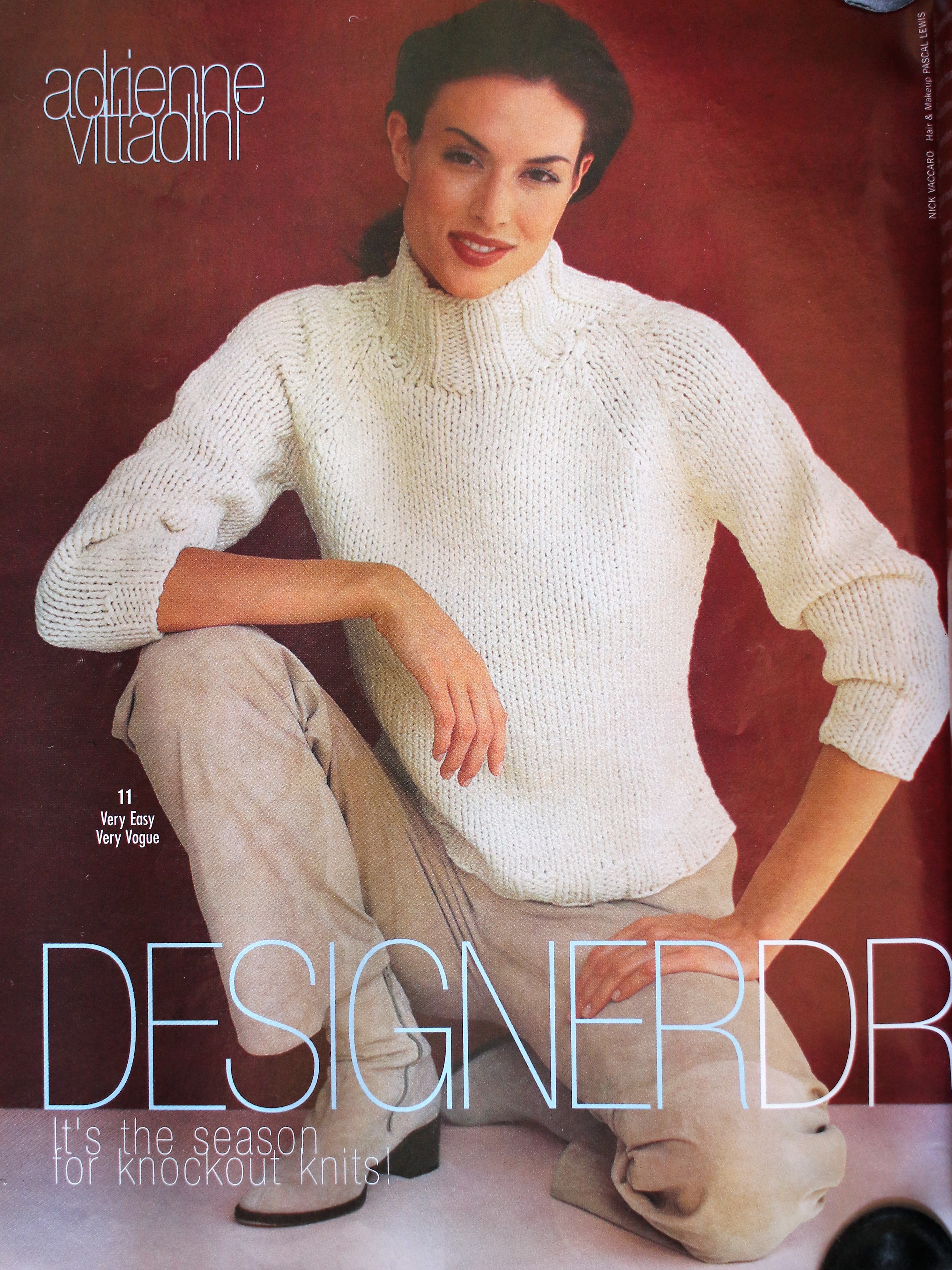
I’m currently knitting another sweater from the same Vogue Magazine issue: an Adrienne Vittidini Turtleneck Pullover. I’ve knit it once before (my sweater is the example in Ravelry). This time I’m dressing it up a bit with some furry yarn: Bernat Marmot and some vintage Brunswick Germantown Worsted.

What I think I’m trying to do is make my items seem simple to do by repetition. But it’s not working, because right now all I can think about is doing a *really* simple project. Something to cleanse my knitting palette.

Do you ever feel like this? And if so, what do you do to get your maker mojo back?

I-Cord Fix Works for Old Sweaters Too

Have you noticed that you’ve stopped wearing an older sweater?

Maybe you feel like you should wear newer ones you’ve knit. Or maybe there’s something, and I know I hate to admit this, that hasn’t held up as well as you’d like.

Many years ago I knit an Einstein Coat. I loved it when I saw it on the pattern designer at a Stitches event and it was very simple to make. The only thing I didn’t like about it was that it was very boxy. So, I made a fitted version. When you alter a sweater pattern, other things can happen. If you are interested, you can read about those foibles in this blog.

Over the years I’ve noticed that more and more, the coat gaps at the button band. Had I knit the sweater as written, this would be less noticeable. But in reviewing others’ results (there’s almost 1500 examples), I’m not alone. A coat knitted with chunky weight yarn is heavy and, as a result, stretches. Over time stretching is more pronounced around the buttons.

I tried just tightening up the buttons, which helped (and I recommend). But it didn’t fix it completely. Others added a button band and/or moved the buttons further in. This can help, but what if you no longer have the same yarn? What if it’s discontinued?

Not wanting to only wear it open, I contemplated frogging it. But then I remembered how much time it took to make it. Hands down, it’s the biggest garment I’ve ever knit. It’s so big, I often I use it for a lap blanket.

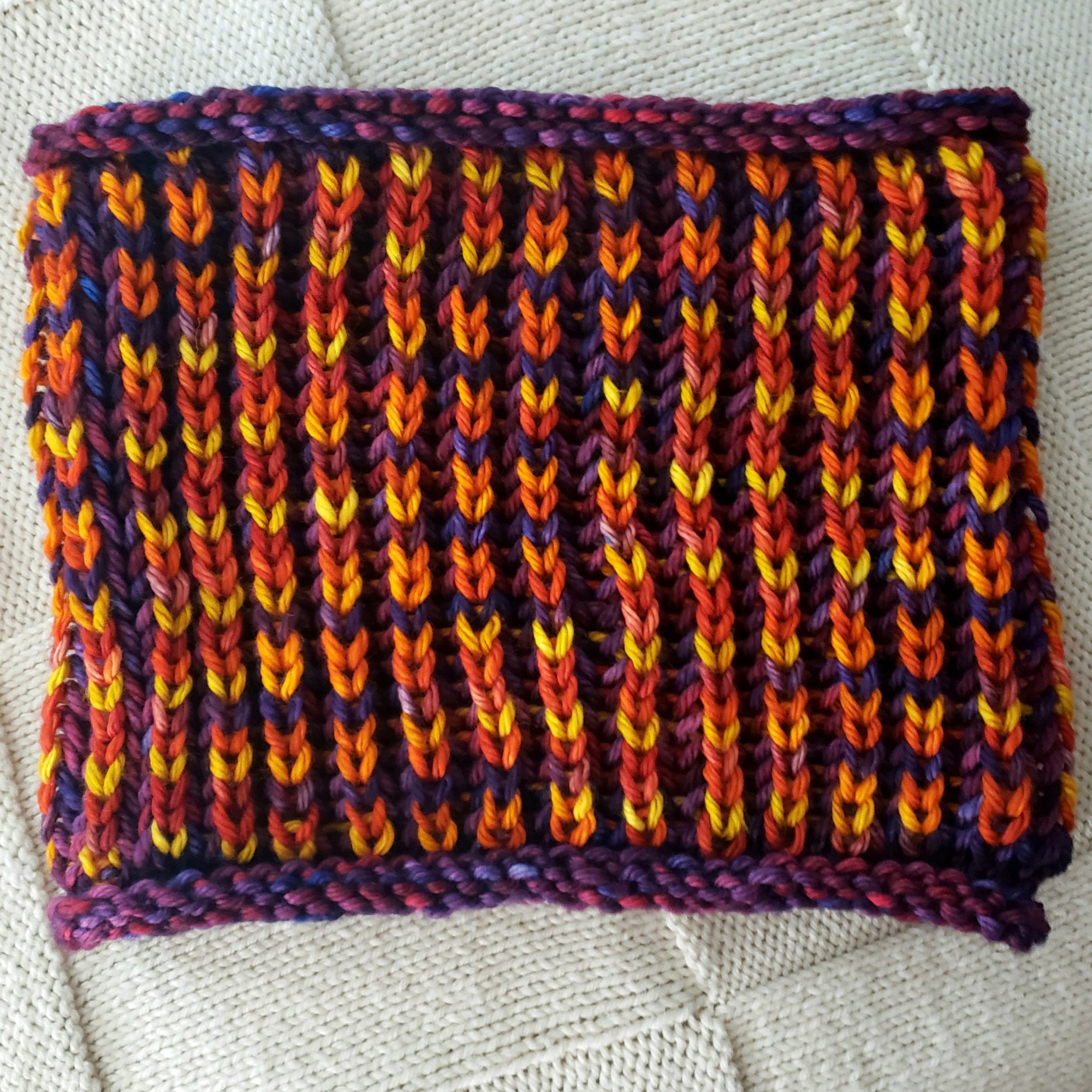
I recently fixed shaping issues with a new sweater by using I-cord, so I thought it might be worth trying it on an old one. When I fixed the new sweater I’d also run out of yarn, so I chose a contracting color. Since i-cord is a finished edge, it looks like an intended design feature. You can read more about that in this blog post.

I started with 3 stitches, but that didn’t wrap around the edge well enough for such a thick fabric. I then tried and stuck with 4, but if I were to do it again, I might use 5. The video I used to get started was this one from Purl Avenue. I watched several, but many were for i-cord bind offs or doing it as you go, not adding it to a finished edge.

Not only did it give me another inch between the buttons and of button band, it shored up the edge and held is straight even when fully buttoned. That made the stretch come from the sweater, not the edge. I also chose a less stretchy yarn (bamboo viscose), rather than wool, to make sure that it wouldn’t become lax over time.
I can’t wait to try this on something else!

And speaking of fixing old sweaters, I’m looking for a way to “loosen” a button band that’s too tight. If you have any ideas for that, I’m all ears. I didn’t knit the sweater (it was a gift), so I don’t the yarn and I’m a bit nervous about unpicking someone else’s work.