
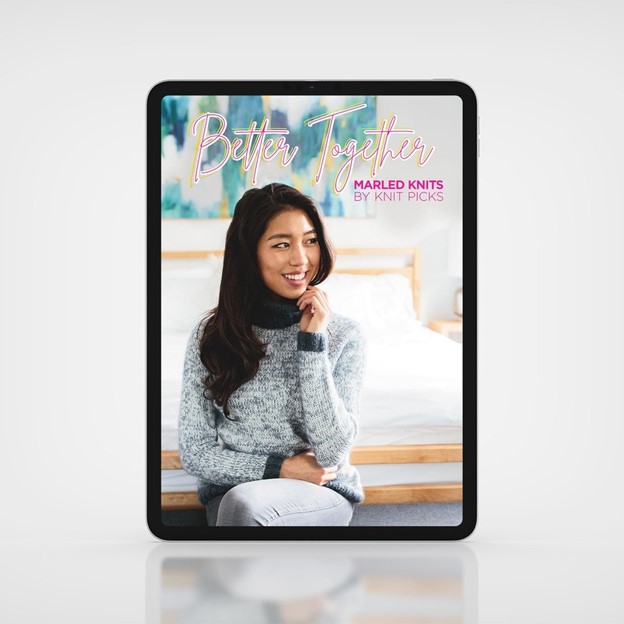
Holding two strands of yarn together can result in beautiful projects. Lately I’ve been drawing inspiration from the KnitPicks book, Better Together: Marled Knits Collection (there’s one for crochet too!).
In a previous post, I created a table based on collating data three yarn manufacturer’s websites. I found it helpful, but I also found it didn’t map to patterns I was using (based on pattern gauge). It also lacked needle sizing which has a huge impact on what yarn weight you end up with when it’s held double.
So, I put my scientific skills to work and did a Ravelry pattern survey and created a table that includes needle sizing and more designer detail. The methodology can be found at the end of the blog. This was much tougher than collating three sites, I had to look at every pattern doubled in every weight to collect needle sizes and confirm gauge accuracy.
As a teaser, I’m now working on a survey for three yarns held together as well as holding differing weights of yarns together (in twos and threes). Compiling this data is no small task, so please be patient!
First, a map of yarn weights collated from various knitting websites (which don’t necessarily correspond to patterns either!). This is how patterns were “mapped” to yarn weights.
| Guide | Common names | Sts over 4” or 10cm |
| Thread* | Thread | 44+ stitches |
| Cobweb* | Cobweb | 40+ stitches |
Lace | Lace, light fingering | 33-40 stitches |
 Super fine | Fingering, sock, baby | 27-32 stitches |
 Fine | Sport, baby, light DK | 23-26 stitches |
 Light | DK, light worsted | 21-24 stitches‡ |
 Medium | Worsted, Afghan, Aran | 16-20 stitches |
 Bulky | Bulky, chunky, craft, rug | 12-15 stitches |
 Super bulky | Super bulky, super chunky, roving | 7-11 stitches |
 Jumbo | Jumbo, roving | 6 stitches or less |
* There is a lot of variation in cobweb weight. I believe this is because it isn’t considered a “standard weight, which is why there’s no “yarn skein” provided by knitting and crochet sites. The thread weight was more consistent, but there are few patterns for it.
‡ Overlap of number of stitches with other yarn weights is intentional and consistent with the original sources.
Table for Yarns Held Double
The most likely weight is shown in bold.
| Single Weight | Doubled Weight | Needle Sizes Range | # Patterns |
| Thread | Cobweb | 1-4 | 3 |
| Thread | Lace | 5-7 | 3 |
| Thread | Light fingering | 8-10 | 5 |
| Cobweb | Lace | 2.5-8 | 18 |
| Cobweb | Light fingering | 5-10 | 7 |
| Cobweb | Fingering | 7-10 | 5 |
| Lace | Light fingering | 2.5-3 | 4 |
| Lace | Fingering | 3-5 | 10 |
| Lace | Sport | 5-8 | 12 |
| Lace | DK | 7-9 | 4 |
| Light fingering | Fingering | 2.5-5 | 4 |
| Light fingering | Sport | 4-9 | 11 |
| Light fingering | DK | 6-8 | 15 |
| Fingering | Sport | 3-7 | 9 |
| Fingering | DK | 6-9 | 16 |
| Fingering | Worsted | 8-10 | 5 |
| Sport | DK | 3-7 | 5 |
| Sport | Worsted | 7-10 | 10 |
| Sport | Aran | 8-10.5 | 13 |
| Sport | Bulky | 10-15 | 2 |
| DK/Lt. Worsted | Worsted | 3-5 | 7 |
| DK/Lt. Worsted | Aran | 6-10 | 17 |
| DK/Lt. Worsted | Bulky | 10-15 | 5 |
| DK/Lt. Worsted | Super Bulky | 19 | 1 |
| Worsted | Aran | 6-8 | 12 |
| Worsted | Bulky | 8-11 | 15 |
| Worsted | Super Bulky | 13-19 | 3 |
| Aran | Bulky | 8-10.5 | 11 |
| Aran | Super Bulky | 11-17 | 13 |
| Aran | Jumbo | 19,35,50 | 6 |
| Bulky | Super Bulky | 11-17 | 18 |
| Bulky | Jumbo | 19,35,50 | 12 |
| Super Bulky | Jumbo | 13-19, 35, 50 | 30 |
Methodology:
- Ravelry filters were used to narrow the patterns to each yarn weight held double. Since they do not allow you to say which direction, a search for “sport” + “held double” gives you both: “sport + sport = Aran” and “fingering + fingering = sport”. I would switch from the beginning to the end pages to avoid double counting patterns.
- 30 patterns for each weight were collated, except for thread (there were only 11 on Ravelry).
- Some patterns claimed doubled yarn weights which do not match the listed gauge (e.g. Jumbo listed as 8 stitches over 4” maps rather to Super Bulky). For consistency, I only used patterns that provided gauge for the knitted item and mapped that to the first table.
- Smooth (and consistently sized fuzzy) yarns only. Bouclé and other variable weight yarns were excluded.
- Stockinette where possible for consistency—though in large weights (Super Bulky and Jumbo), garter was included to get a sufficient survey count of 30 patterns.
- Needle weights were ranges selected from the patterns surveyed. Needle sizes that were huge on small yarns were largely excluded due to “bonkers” (a technical term) variability inconsistent from other patterns.
- Since DK overlaps with Sport, I used the designer’s choice, rather than pattern gauge.

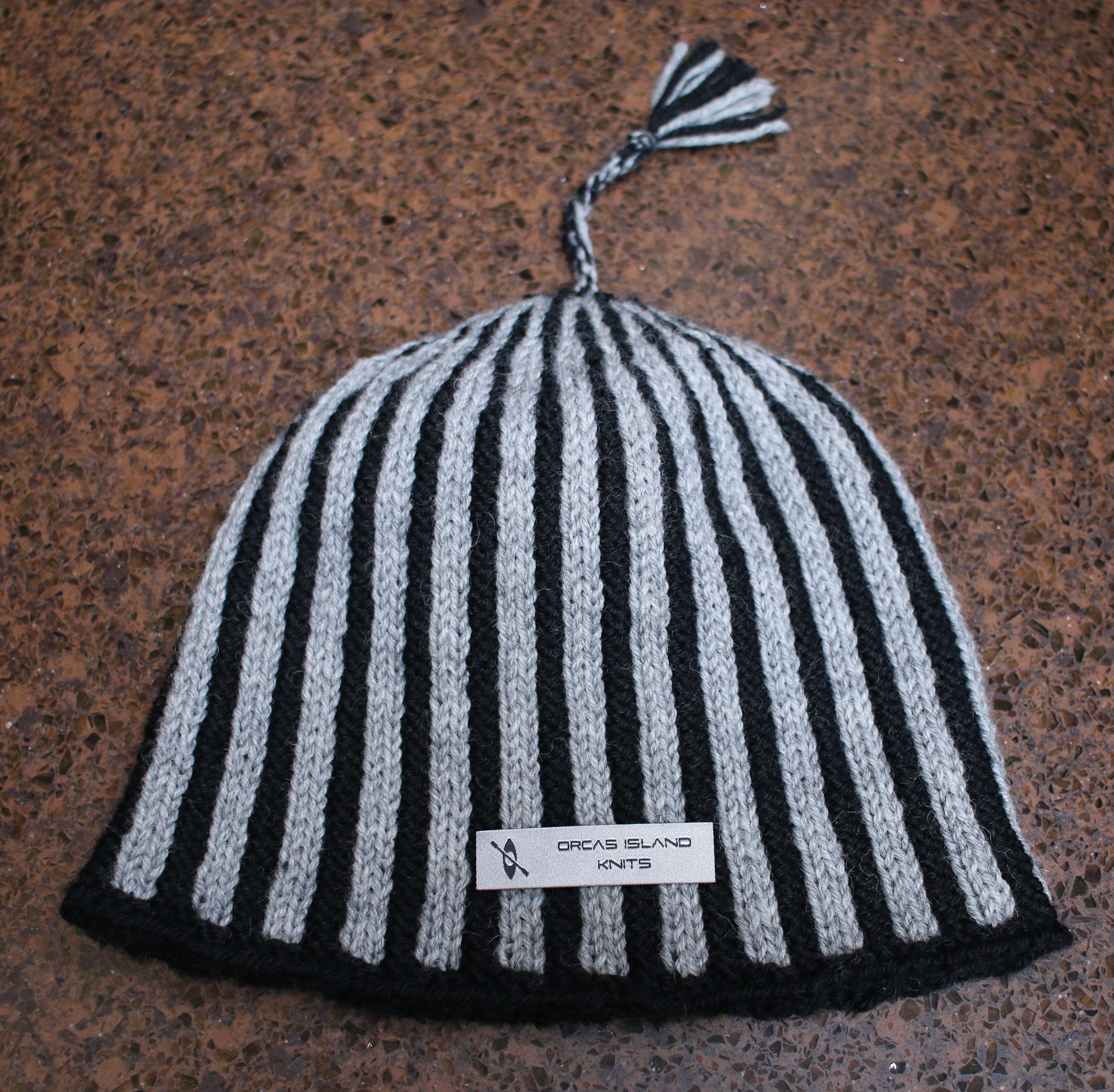
 Orcas Island Knitting