A Survey-Based Key for Holding Two Strands Together

Holding two strands of yarn together can result in beautiful projects. Lately I’ve been drawing inspiration from the KnitPicks book, Better Together: Marled Knits Collection (there’s one for crochet too!).
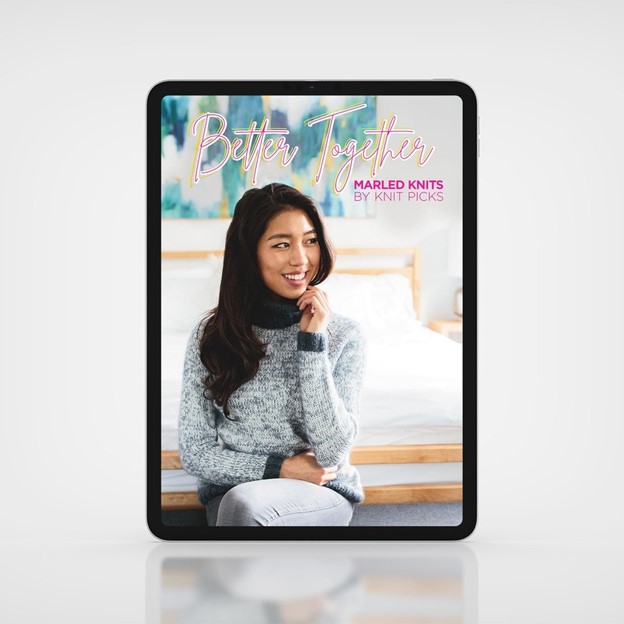
Photo © KnitPicks

In a previous post, I created a table based on collating data three yarn manufacturer’s websites. I found it helpful, but I also found it didn’t map to patterns I was using (based on pattern gauge). It also lacked needle sizing which has a huge impact on what yarn weight you end up with when it’s held double.

So, I put my scientific skills to work and did a Ravelry pattern survey and created a table that includes needle sizing and more designer detail. The methodology can be found at the end of the blog. This was much tougher than collating three sites, I had to look at every pattern doubled in every weight to collect needle sizes and confirm gauge accuracy.

As a teaser, I’m now working on a survey for three yarns held together as well as holding differing weights of yarns together (in twos and threes). Compiling this data is no small task, so please be patient!

First, a map of yarn weights collated from various knitting websites (which don’t necessarily correspond to patterns either!). This is how patterns were “mapped” to yarn weights.

GuideCommon namesSts over 4” or 10cm
Thread*Thread44+ stitches
Cobweb*Cobweb40+ stitches

Lace
Lace, light fingering33-40 stitches

Super fine
Fingering, sock, baby27-32 stitches

Fine
Sport, baby, light DK23-26 stitches

Light
DK, light worsted21-24 stitches

Medium
Worsted, Afghan, Aran16-20 stitches

Bulky
Bulky, chunky, craft, rug12-15 stitches

Super bulky
Super bulky, super chunky, roving7-11 stitches

Jumbo
Jumbo, roving6 stitches or less

* There is a lot of variation in cobweb weight. I believe this is because it isn’t considered a “standard weight, which is why there’s no “yarn skein” provided by knitting and crochet sites. The thread weight was more consistent, but there are few patterns for it.

‡ Overlap of number of stitches with other yarn weights is intentional and consistent with the original sources.

Table for Yarns Held Double

The most likely weight is shown in bold.

Single WeightDoubled WeightNeedle Sizes Range# Patterns
ThreadCobweb1-43
ThreadLace5-73
ThreadLight fingering8-105
CobwebLace2.5-818
CobwebLight fingering5-107
CobwebFingering7-105
LaceLight fingering2.5-34
LaceFingering3-510
LaceSport5-812
LaceDK7-94
Light fingeringFingering2.5-54
Light fingeringSport4-911
Light fingeringDK6-815
FingeringSport3-79
FingeringDK6-916
FingeringWorsted8-105
SportDK3-75
SportWorsted7-1010
SportAran8-10.513
SportBulky10-152
DK/Lt. WorstedWorsted3-57
DK/Lt. WorstedAran6-1017
DK/Lt. WorstedBulky10-155
DK/Lt. WorstedSuper Bulky191
WorstedAran6-812
WorstedBulky8-1115
WorstedSuper Bulky13-193
AranBulky8-10.511
AranSuper Bulky11-1713
AranJumbo19,35,506
BulkySuper Bulky11-1718
BulkyJumbo19,35,5012
Super BulkyJumbo13-19, 35, 5030

Methodology:

  • Ravelry filters were used to narrow the patterns to each yarn weight held double. Since they do not allow you to say which direction, a search for “sport” + “held double” gives you both: “sport + sport = Aran” and “fingering + fingering = sport”. I would switch from the beginning to the end pages to avoid double counting patterns.
  • 30 patterns for each weight were collated, except for thread (there were only 11 on Ravelry).
  • Some patterns claimed doubled yarn weights which do not match the listed gauge (e.g. Jumbo listed as 8 stitches over 4” maps rather to Super Bulky). For consistency, I only used patterns that provided gauge for the knitted item and mapped that to the first table.
  • Smooth (and consistently sized fuzzy) yarns only. Bouclé and other variable weight yarns were excluded.
  • Stockinette where possible for consistency—though in large weights (Super Bulky and Jumbo), garter was included to get a sufficient survey count of 30 patterns.
  • Needle weights were ranges selected from the patterns surveyed. Needle sizes that were huge on small yarns were largely excluded due to “bonkers” (a technical term) variability inconsistent from other patterns.
  • Since DK overlaps with Sport, I used the designer’s choice, rather than pattern gauge.
Analysis Paralysis

It’s been a big year for a lot of things. Well, everything except knitting. I made quite a few pairs of socks, due to the portability on my extensive travels. But I’m a bit bored with socks now—even with the additional texture work.

I’m ready for something bigger and bolder. But I’m stuck.

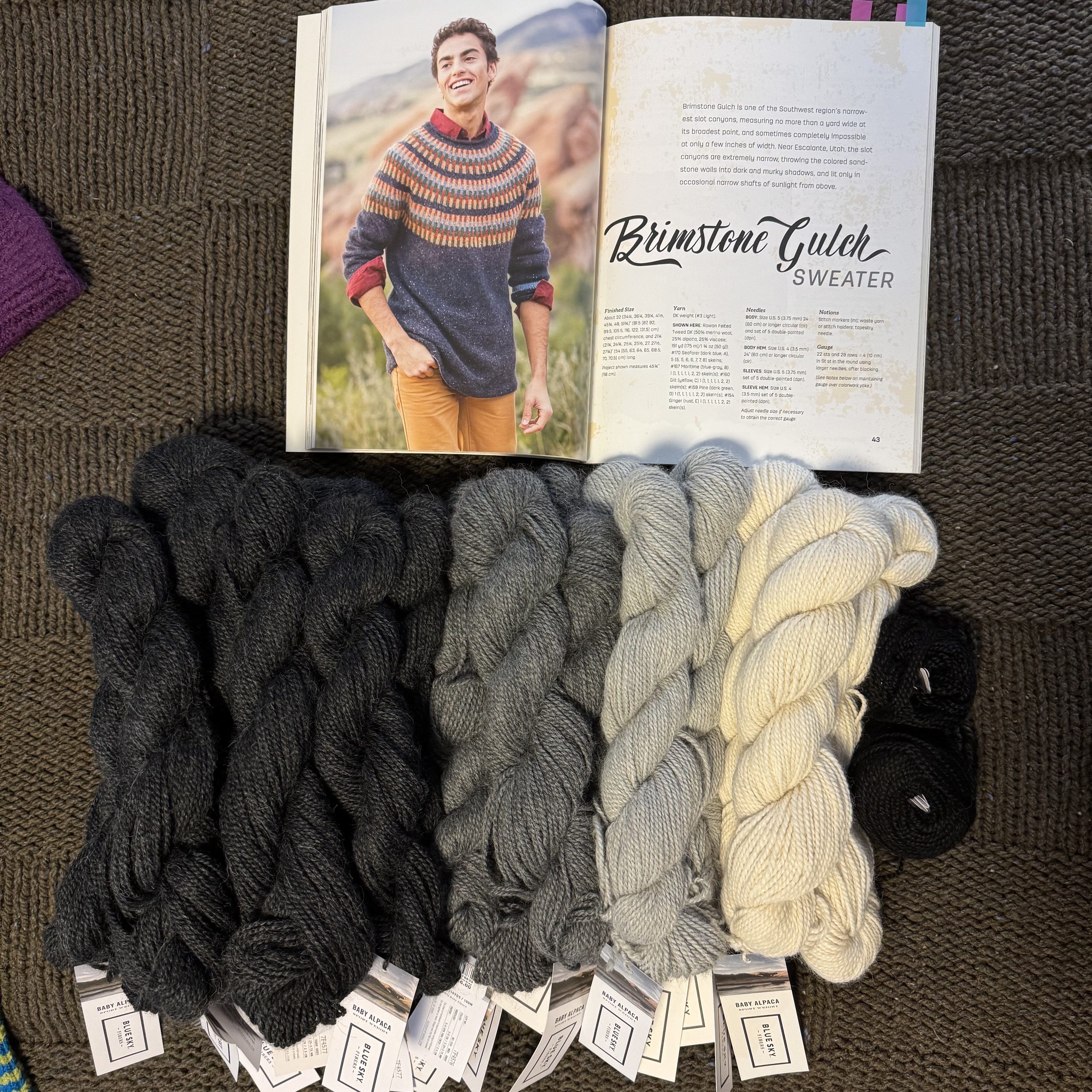
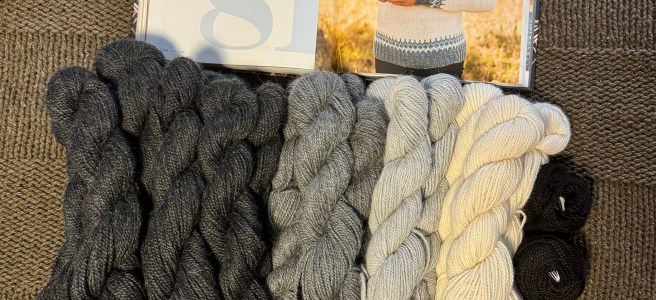
I’ve been spending lots of time on Ravelry dreaming and filling up my queue. The problem is I’m not knitting, I’m just doing a lot of creative dreaming and getting nowhere–fast! And lately I’ve been on a yarn buying spree, especially Blue Sky Fibers’ Baby Alpaca. I’m up to 7 (!) colors now.

My questions for you are:

  1. Do you ever get stuck in planning mode, and if yes why?; and
  2. How the heck do you jar yourself out if it?

I guess that’s 2.5 questions. 😊

PS: The project I’m trying to sort out is a yoked sweater and I’m choosing between two Interweave patterns I have: the Brimstone Gulch or Meltwater Pullover in Icelandic colors (see below). And suddenly, I’m looking up patterns for palazzo pants. Geez!

PPS: He chose Option 2. I’d better get winding.

Braids on the Brains

Guilty as charged. I have once again exceeded one page on my Ravelry knitting queue. And yes, I’ve got not one, not two, but three projects all scoped, yarn balled, ready to go. I’m sure you know the feeling—the wanderlust of planning a new project. I personally think that this interferes more with my knitting than anything else since it takes up the same cordoned off time.

And here I was, minding my own business, reading others’ blogs and pursuing Ravelry and the Purl Soho site that I hit on a great combination of projects I’m dying to knit as a set.

The first is a shaped braided cable capelet by Erica Patberg in Interweave  and the second is a 2015 pattern from Purl Soho for a braided cowl.

Too matchy matchy?

6000+ Pullover Possibilities? Not quite.

When I toy with the idea of being a fulltime knitter I’m always reminded of what Nicki Epstein said to me when I told her I was a budding designer. “Don’t quit your day job!” This was not in response to my skill as a designer—she hadn’t seen any of my patterns—her point was that anyone trying to make a living of it would starve unless they had another means of support these days.

Though Knitting is now mainstream, and I credit Ravelry with being one of the bigger catalysts of this movement among the Internet savvy, making knitting your job would be hard in spite of the moving stories on various podcasts and blogs of people that have gone down that road. The fact is, most of them do have another means of support.

But I digress.

If you’ve read this blog before you probably know the only thing I purchase in larger quantities than yarn is patterns. Literally my Ravelry library is considerably larger than my stash–4200+ patterns at last count. I have books and magazines dating back to Vogue Knitting issues from the 40s. I collect patterns.

This might seem odd, given I can and often do create my own patterns. And despite being in high-tech and spending a lot of time (in the past) writing code, I do not use sweater designer software. Instead I prefer the creativity and error prone method of graph paper and swatching. In part, I attribute this to having inherited most of my stash.

I saw Melissa Leapman’s book 6000+ Pullover Possibilities, as a way to have my cake and eat it too. Firstly I love her designs—such attention to detail! I thought I could use her book to make my pastime a bit less frustrating—leaving more time for garment making and less time for scratching my head over pattern design and math. And I was half right.

On the positive, this book contains great sizing charts—so if I were to ignore Nicky’s advice and decide to become a designer—this would be a VERY helpful guide indeed. From XS to 4X they are completely spelled out and even over different gauges. Wowza! These charts alone make the book extremely helpful to folks on a stash reduction diet.

6000 possibilities-2

What this book doesn’t contain is 6000 sweater possible sweaters. There are 3 sweater silhouettes, four sleeve styles, 6 collars and some “treatments”. If you do the math you could say you have 72, but these are all so similar and completely classic that the “possibilities” are closer to 4-5 actual designs.

Is it worth the $24.95? I’d say so. Especially for reducing the trial and error of stash busting. But I am just slightly disappointed that there aren’t a few more silhouettes—especially for more fashion forward designs, to really make this a “must have” book.

When I compare that to Sequence Knitting, which I turn to as a great reference guide, I’d have to say I stack rank it a bit higher. But perhaps that will change the more that I use it.

Variation on a Theme

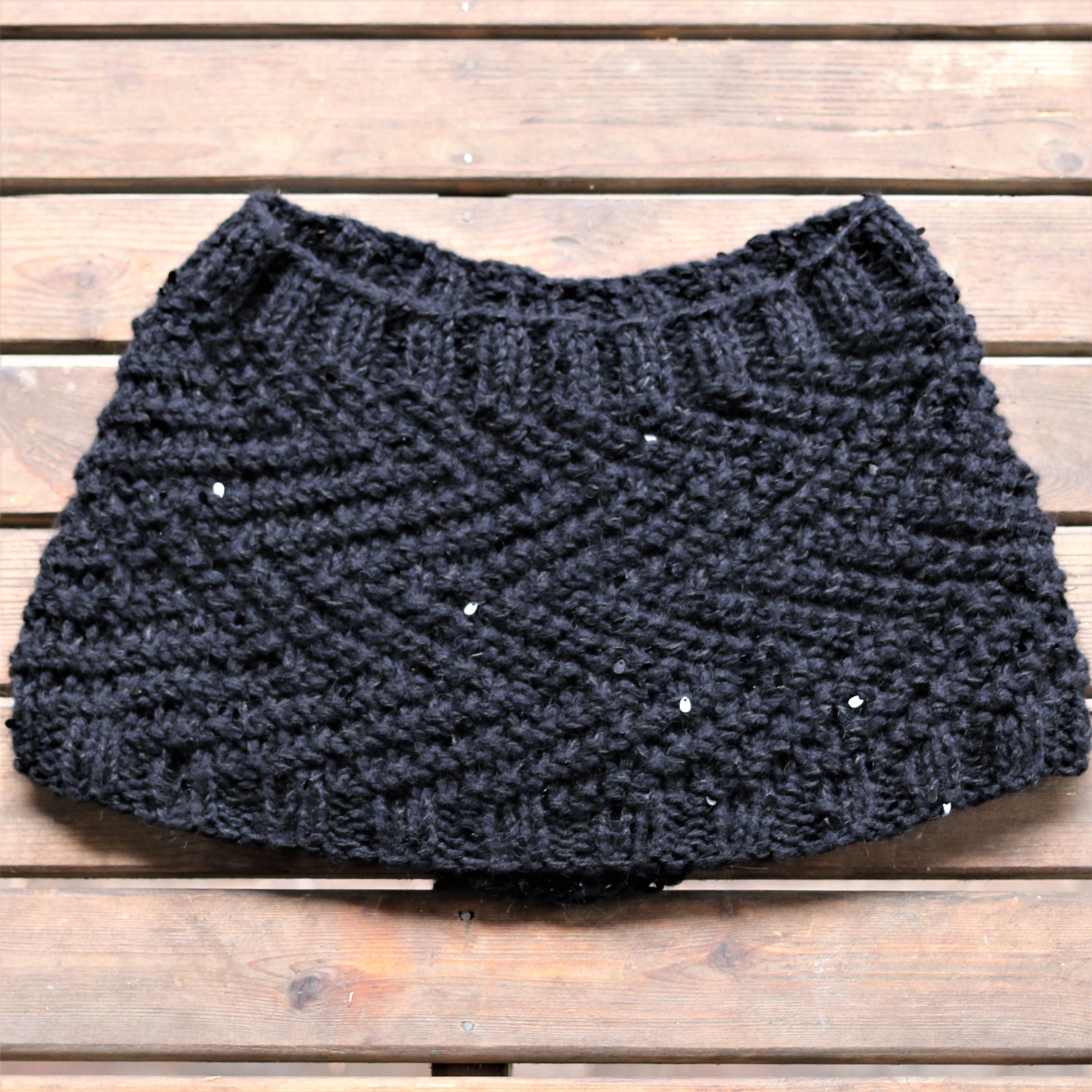
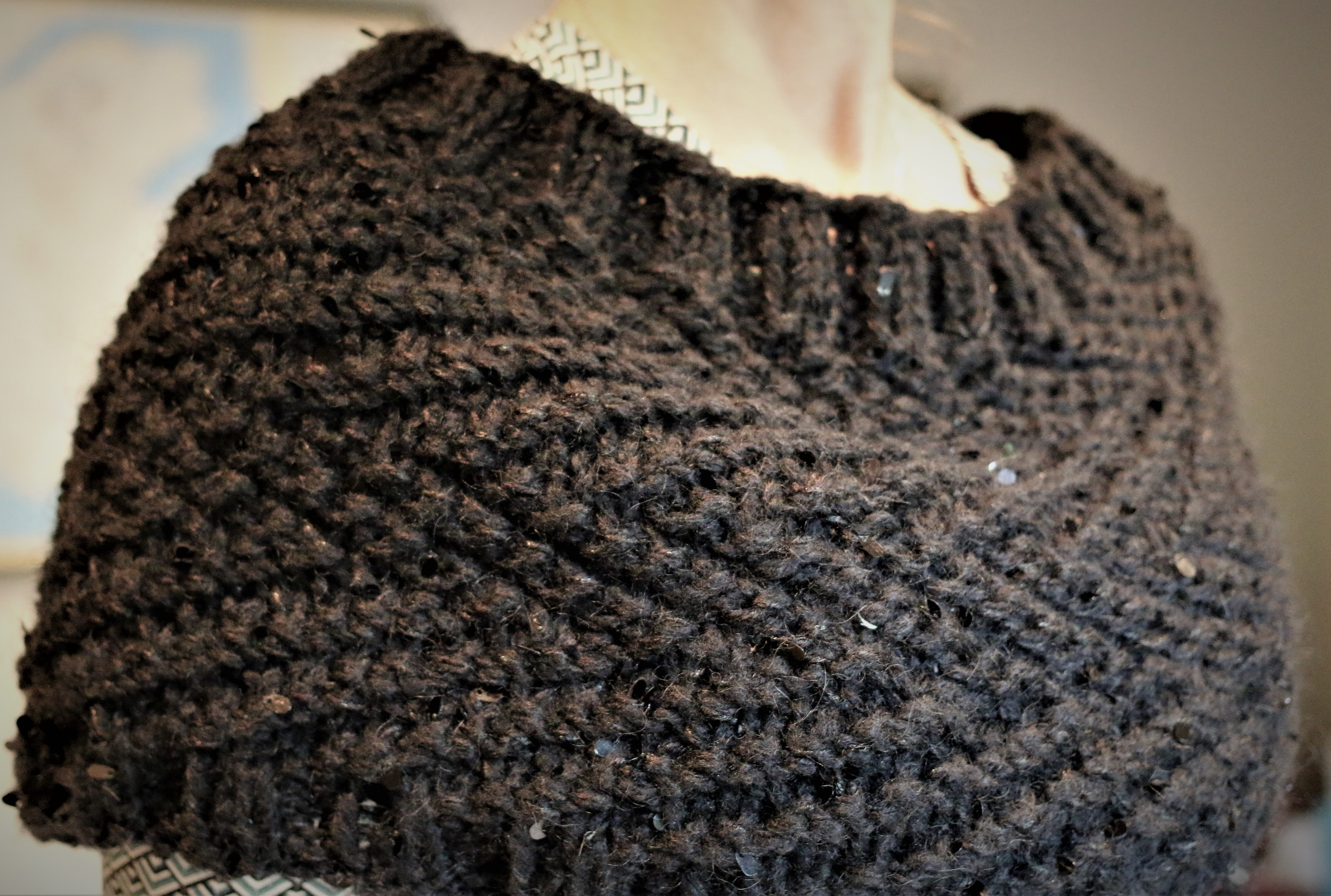
My Quickie Caplet pattern keeps taking on “new life”. It’s such a simple pattern that you can do pretty much anything with it and still come out with a handy shoulder warmer.

IMG_5440.JPG

This one is for a co-worker of mine. I’m calling it Swanky Caplette since one of the yarns is Red Heart’s Swanky which adds a bit of sparkle when the light catches the little metallic beads in the yarn.

I started out using a pattern from Sequence Knitting a K2 P2+1 modified rib—and planned to make it a spiral, but on a decrease row I must have had a reversal, because I realized the following morning after a night knitting session in front of the TV, that it was spiraling the other way.

No worries! I just counted the rows and completed another set before turning around and going the original direction—and Voila! It looks like I meant to do it that way, no?

Welcome to my world of ad hoc knitting! I love creating a unique piece every time!
IMG_5432-retouch.jpg

By the time you read this, I’ll be in Italy hopefully hitting some of the great knit shops in Milan. It’s my first time to Italy and I cannot wait!

Brioche in Plain English

I’ve struggled with two color brioche and for someone that has been knitting brioche for many decades without a hitch—both in the round and flat—this is a huge source of frustration. I decided to take multiple classes until I could master it. The upshot is that this approach did not work, so I hope to save you the trouble and expense and hopefully a lot of angst.

The problem isn’t you, it’s the lingo.

Recently there has been a largely unnecessary adaptation from standard knitting terms which might sell books and patterns, but stymies people that just want to do these techniques without having to learn new terminology, take classes or buy books.

*deep sigh*

I was bewildered when a member of my guild said that Nancy Marchant “had to invent new terms” because there weren’t any, the only thing I could think would prompt such a remark is that she wasn’t aware that brioche knitting is technique had been around for centuries. And while vintage patterns use multiple methods of description (the rational for creating a new “standard”) each of these ways is easily more comprehensible to me, but most lack the colorwork I want to learn.

At no small expense I flew to Colorado for YarnFest to take my second (and third) class on the topic from Mercedes Tarasovich-Clark (the first was 4 years ago from Nancy herself at Vogue Knitting in Seattle). Once again I failed to learn the technique.

Admittedly part of the problem was I sat next to a tardy 20-something “troll” who had taken the class before and poured scorn in a loud whisper on other attendees who failed to grasp it. She had lots of fodder since that happened to be the majority of the ladies there—all of whom were knitting veterans with decades of experience looking for a way to bridge this unnecessary gap. Needless to say, I left early just to get away from her competitive, obnoxious behavior.

I’m not the type to give up, especially when it is something I know well, like brioche. So I immediately turned to the web to uncover a solution—right there in my hotel room—knowing I was going to have the follow on course the next day and would need to know how to do two color to move onto increases and decreases.

If you’ve also struggled, I want you to know that I’ve discovered that others are still willing to use the standard terminology to teach these fairly basic techniques and give you equally good results—at no charge.

That evening I came across a YouTube video by a lovely young lady, Stephanie of Milk Shed, and learned, in ten minutes, exactly what the first 2 hours of the class covered. And the lingo? Good old fashioned slips with yarnovers and knit/purl to togethers. There is also a written tutorial that comes with a free cowl pattern. Even Jo-Ann’s is getting into the plain English act with their online tutorials—not a BRK (brioche knit) or a BRP (brioche purl) in sight!

And not to worry if you want to knit a newer pattern. I found that once I mastered the techniques it was fairly straight forward to work in reverse. All you have to do is to map normal knitting terms onto the newer patterns.

*deep happy breath*

To Buy the Book or Download the Pattern, That is the Question

When one project ends another begins? Hmm. That’s not going so well for me right now. And why is that? Too many choices and this time yarn is less of an issue.

Ella Rae Heather--The Slipper (Yarn) Looking for It's Cinderella (Pattern)
Ella Rae Heather–The Slipper (Yarn) Looking for It’s Cinderella (Pattern)

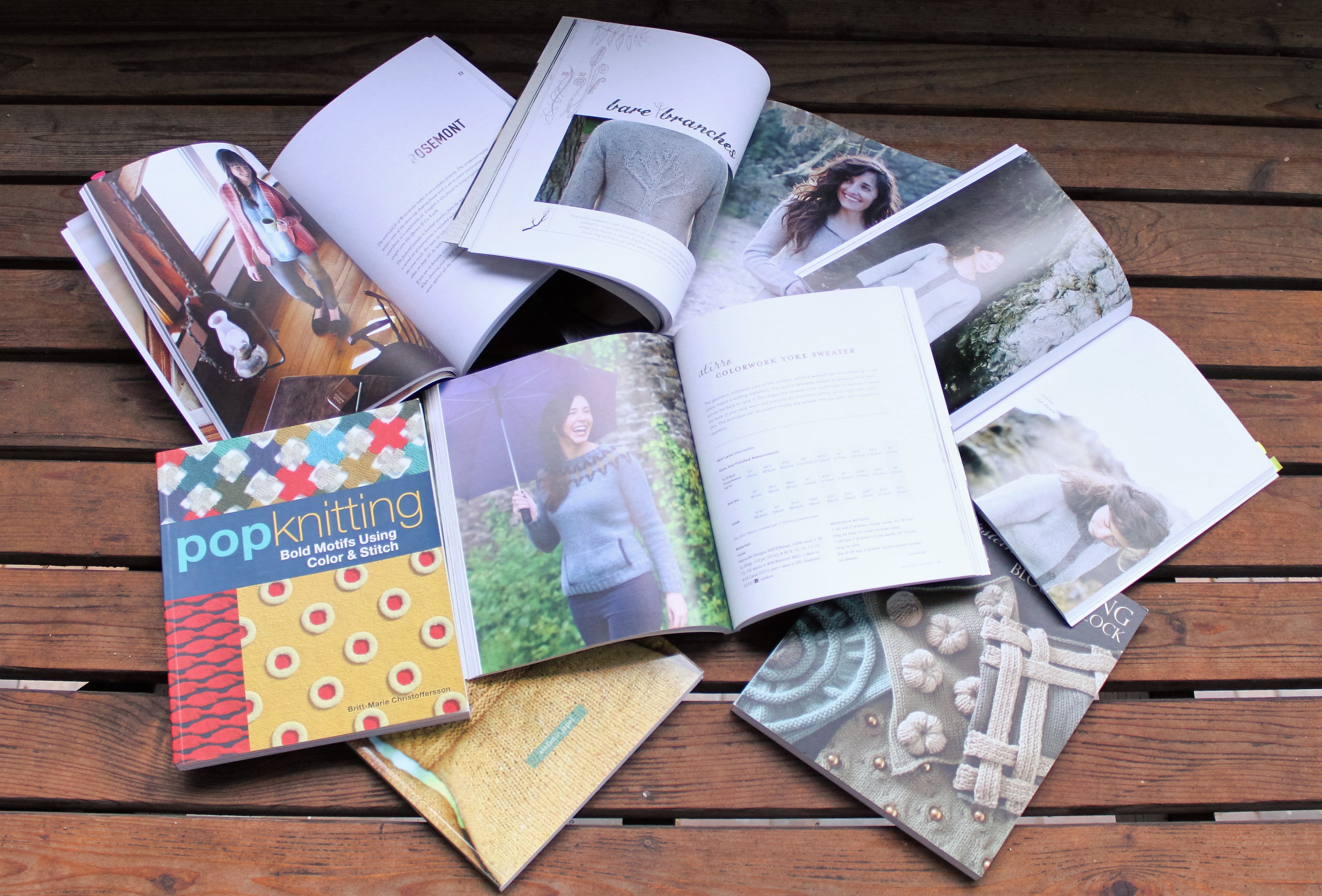
If you think my stash is extensive, you should see my pattern collection. According to Ravelry I have 3566 patterns as of this writing and rising. Given I have Sequence Knitting by Cecelia Campochiaro in route and Free Spirit Knits by Anne Podlesak on pre-order, the number of patterns in my library will continue to rise. For now.

Only one shelf of many such books

The reality is, whether for reading or crafting, I love the feel of a book or magazine in my hands. Still, with the same online patterns readily available and usually less than $10, and given I knit one or less patterns per book, why I’m buying a whole book? It seems much more cost effective to break this purchasing  habit?

Decades of Knitters and Vogue Knitting Magazines

You have to admit a downloaded pattern lacks the aesthetic of a truly well-designed book. There’s something about crisply presented visuals like those in the Madder Anthologies (1 or 2) by Carrie Bostick Hoge or Hannah Fettig’s Home and Away that get the juices flowing.

After a Ravelry Search (of my own patterns) these were the top book contenders

Still, given I’ve successfully executed sweaters with online patterns wouldn’t it just make more sense to stop buying books? And might that reduce the time from planning to starting a project?

Have you made the conversion and what wisdom might you share?

Narrowing by style gave me just the open books

PS: thank goodness for Ravelry’s library. Since I’ve posted my patterns I’ve found beautiful ones in my own collection I never knew I owned.

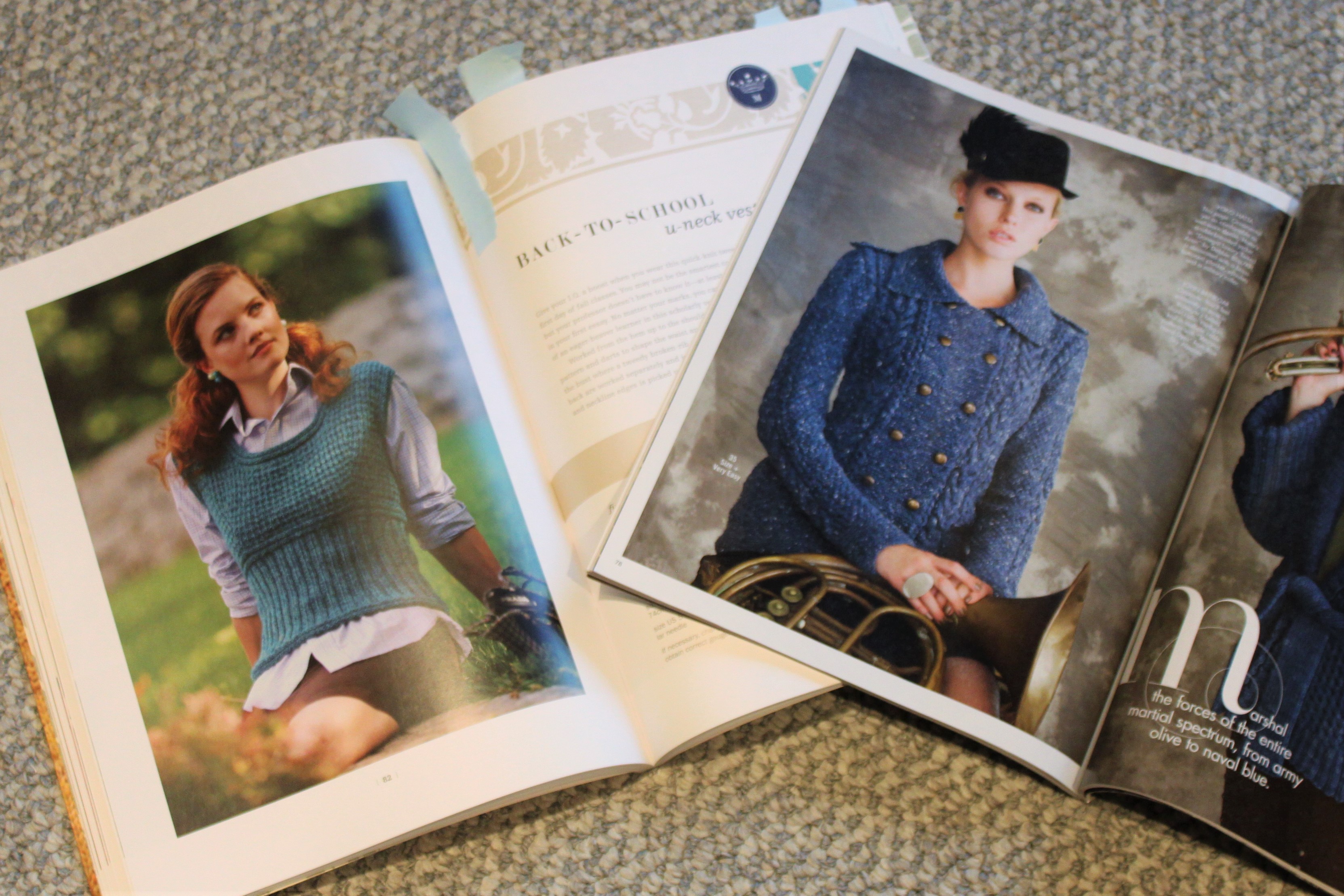
The Final Contenders--Vogue Knitting Winter 2012 and Fitted Knits by Stefanie Japel
The Final Contenders–Vogue Knitting Winter 2012 and Fitted Knits by Stefanie Japel